

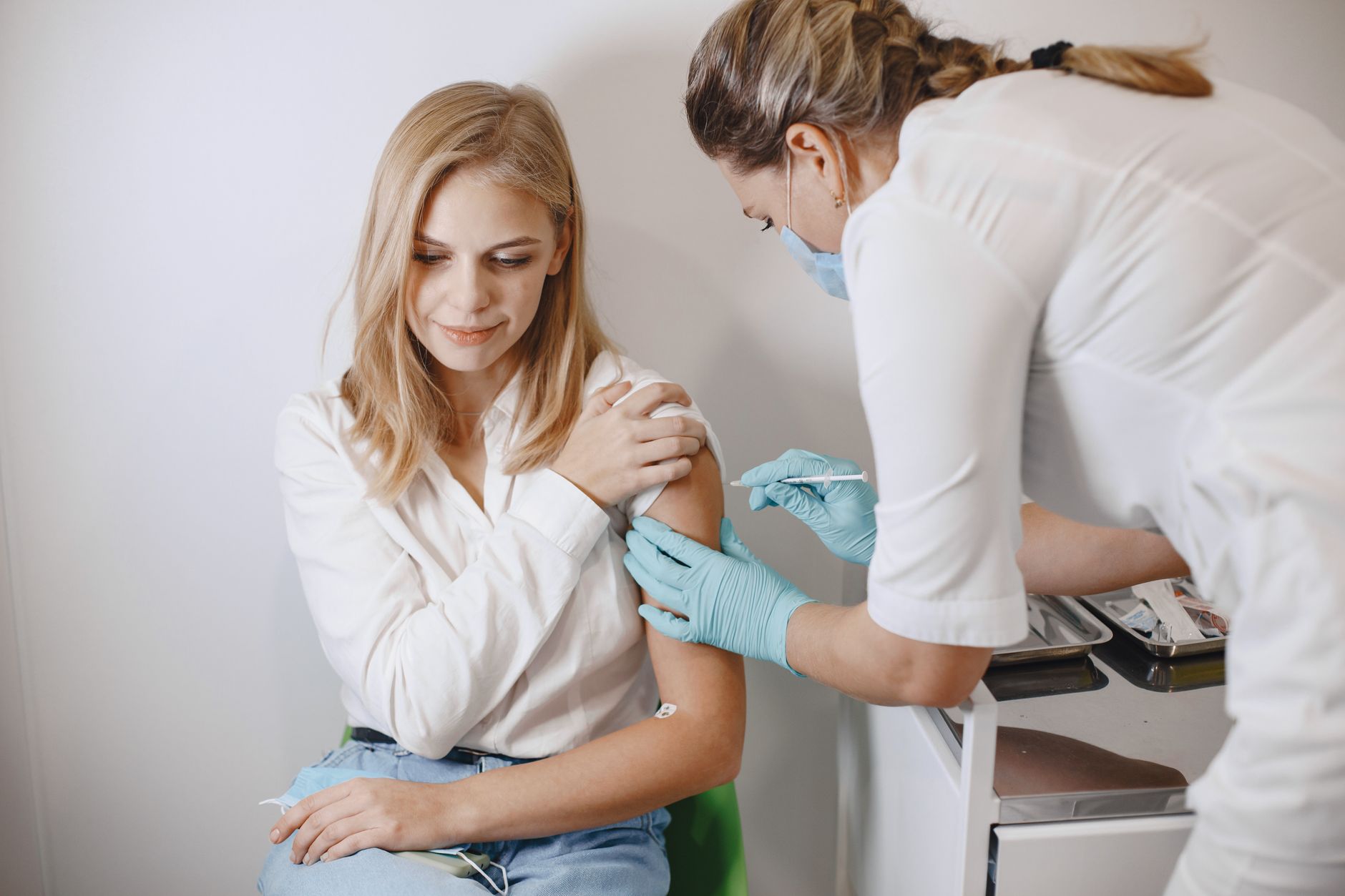
The pharmacy sign went up in August. Walgreens is offering $15 in Walgreens Cash, CVS hands you a $5 coupon, and the message is the same everywhere: get it now, get it early. If you’re reading this in mid-October without a bandage on your arm, you probably feel behind. You aren’t. For most healthy adults, the best time to get a flu shot is right about now, and the person who got hers on August 15 to grab the coupon may walk into February with less protection than you’ll have.
This is a pro-shot argument about the calendar, and the CDC’s own data makes it.
The flu shot starts fading the day you get it
Flu vaccines don’t hold steady all winter. A 2021 study in Clinical Infectious Diseases, led by CDC epidemiologist Jill Ferdinands, followed adults hospitalized across four flu seasons (2015-16 through 2018-19) through the US Hospitalized Adult Influenza Vaccine Effectiveness Network. Protection peaked shortly after vaccination and then fell by about 8 to 9 percentage points per month. That decline held for H3N2, H1N1, and influenza B. For adults 65 and older, it was steeper, closer to 10 or 11 points a month.
There’s a fair caveat here. Some researchers argue part of that drop is an artifact of how effectiveness gets measured, and a University of Sydney review published this April notes the waning may also depend on how much the circulating strains mutate over a season. But nobody serious argues the shot gets stronger with time. The direction is settled. Only the slope is up for debate.
“Get it in September or October” is the advice you’ve heard a hundred times. What nobody shows you is what that fade looks like in February, the month that decides if you spend a week in bed.
Flu peaks in February, which is why an August shot comes up short
The CDC tracked peak flu activity across 40 seasons, from 1982-83 through 2023-24. Most seasons peaked between December and February, and February was the single most common peak month, in 17 of those seasons.
So your shot’s job isn’t to protect you on Halloween. It’s to still be doing something on Valentine’s Day. Here’s the rough math, using a simple straight-line version of the Ferdinands decline (8.5 points a month, the middle of their range).
Say this year’s shot starts out as good as last year’s. The CDC’s preliminary estimate for 2024-25 was 56% effective overall, one of the better years on record. If you got that shot on August 15, February 15 is six months away. Six months at 8.5 points is 51 points lost, which leaves roughly 5%. That’s close to nothing.
Now say you get it on October 20. February 15 is about four months out. Four months at 8.5 points is 34 points, which leaves you around 22%. Same shot, same price (usually $0 with insurance, or around $20 cash at a pharmacy for adults under 65), and about four times the protection at the most likely peak. Even a mid-September shot, five months out, lands near 13%.
These numbers are a sketch, not a forecast. Real waning probably isn’t a perfectly straight line, and the starting point changes every year: CDC’s overall estimates since 2015-16 have ranged from 29% to 56%. Last season’s preliminary figure was 36%, partly because the dominant H3N2 strain, subclade K, drifted away from what was in the vaccine. In a weaker year like that, an August shot can be spent by Christmas. The point of the arithmetic is the gap between the two dates, and that gap shows up whatever starting number you plug in.
Mid-October is the sweet spot, and Halloween is the deadline
If later is better, why not wait until December? Because you’re betting against a virus that doesn’t check your calendar.
The shot takes about two weeks to reach full strength, according to the CDC guidance Consumer Reports summarized. And this season is already moving. The CDC’s FluView report for the week ending October 3, 2026 called activity “low” but “increasing in many parts of the country,” with the highest levels on the West Coast. Test positivity hit 9.5% in HHS Region 9 (California, Arizona, Nevada, Hawaii) while it sat at 1.7% in Region 2. Of the influenza A samples public health labs subtyped that week, 98.4% were H1N1.
That’s why the official guidance lands where it does. The CDC’s immunization advisers say vaccination should ideally happen in September or October, and that most adults, especially those 65 and older, should avoid getting vaccinated in July or August unless they’re worried they won’t get another chance. That last clause matters. Infectious disease specialist William Schaffner put it bluntly to Consumer Reports: “A vaccine deferred is often a vaccine that’s not received.” A slightly faded shot beats the one you meant to get and never did.
So here’s how I’d read the calendar for 2026. If you haven’t been vaccinated, book it this week or next, and aim to be done by the end of October. If you live on the West Coast, where cases are already climbing, don’t push it to the last day. And if life gets in the way and it’s suddenly mid-November, get it anyway. The CDC is clear that vaccination should continue as long as flu is circulating.
You already got it in August? You’re still better off than skipping it
Maybe you took the coupon. Fine. You’re protected now and less protected later, which still beats the 0% you’d have without it. The CDC’s recommendations for adults call for one dose per season, so a second shot at the pharmacy counter isn’t the fix. The fix is next year: put a reminder in your phone for the second week of October 2027, and treat a February cough a little more seriously than you would in November. If you’re feverish and achy in peak season, call your doctor that day instead of waiting it out.
Timing matters more for some people than for others. Children between 6 months and 8 years who need two doses should get the first one as soon as it’s available, because the doses have to be at least four weeks apart. People in their third trimester of pregnancy can reasonably get vaccinated in July or August so the baby gets antibodies at birth. And adults 65 and older, who lose protection fastest, are advised to get a high-dose, recombinant, or adjuvanted vaccine when one is available. If any of that describes you or someone you care for, talk to your doctor about the right date rather than following the pharmacy sign.
The best time to get a flu shot is a date on your calendar
The deals are real and you should take them. Walgreens’ $15 credit is the best of the big chains this year, and Sam’s Club members get $10 off their next trip. The deal just doesn’t expire in August. Every one of those offers runs through the fall, CVS’s through December 31.
So pick a date between now and October 31, put it on your calendar like a dentist appointment, and go. If open enrollment is also on your list this month, our HDHP vs PPO math walks through how to pick next year’s plan by testing your worst year. And if winter tends to wreck your energy, the piece on the sleep-hormone connection is worth reading next. The best time to get a flu shot is late enough to carry you into February and early enough that you really go.