

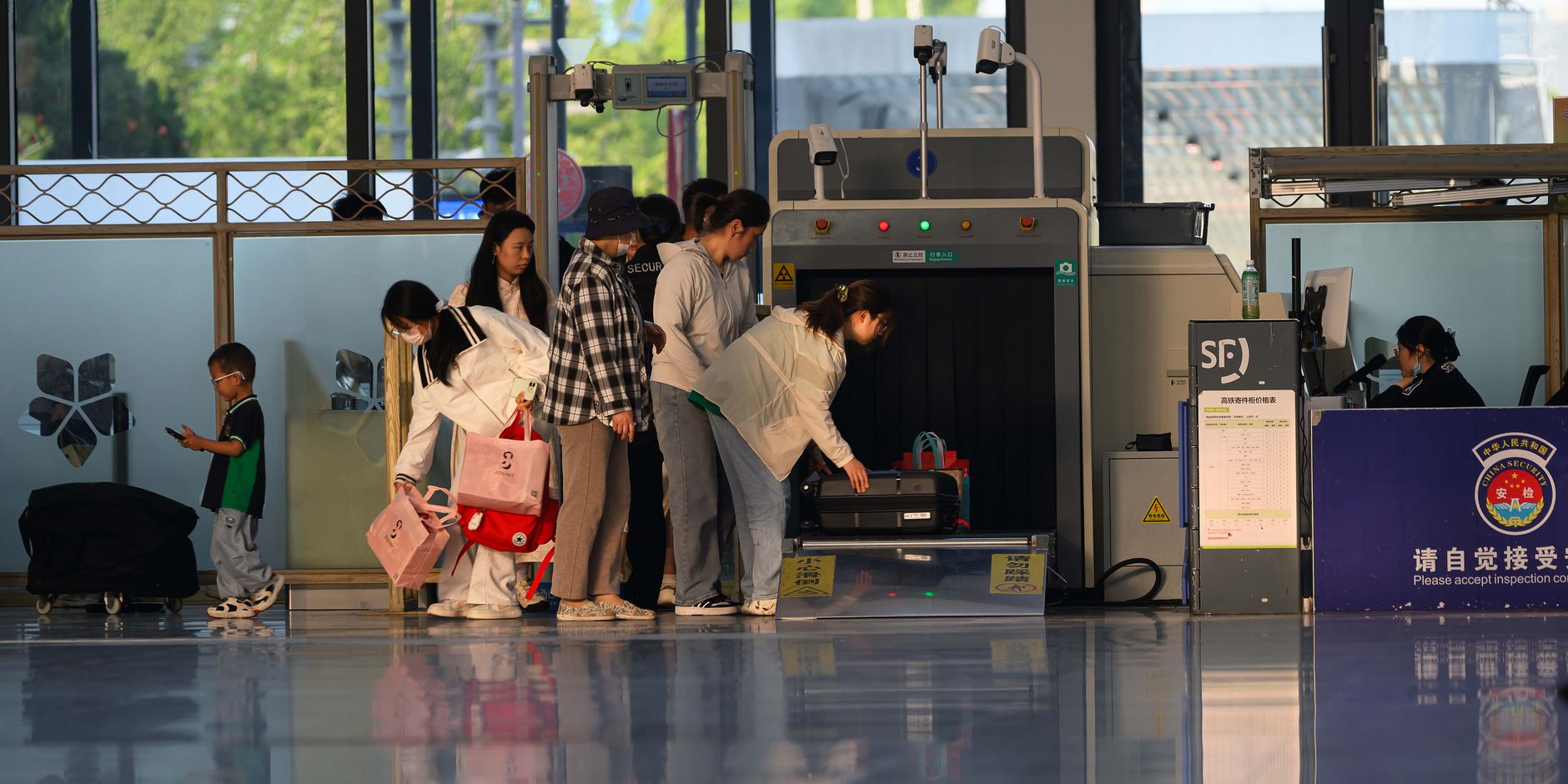
On the Sunday after Thanksgiving last year, TSA screened 3,133,924 people, the most in the agency’s history. If you’re flying home for the holidays this year, you’ll be in some version of that crowd, and the question of which line you stand in is worth settling now, while there’s still time to get approved. Most comparisons of TSA PreCheck vs Global Entry end with “it depends how often you fly abroad.” I think that answer is out of date. Two rule changes and one very awkward spring have tilted the math, and for most women who fly a few times a year, the $120 option is the better buy even if your passport mostly lives in a drawer.
PreCheck is the floor, and it’s a good floor
Start with what you get for the cheapest ticket. TSA PreCheck costs $76.75 to $85 for five years depending on which enrollment provider you use (IDEMIA, Telos, or CLEAR), and renewals run a little less. You keep your shoes, belt, and light jacket on, and your laptop and 3-1-1 liquids stay in your bag. In its April 2026 announcement of a short-lived $20 discount for travelers 30 and under, TSA said that 99% of PreCheck passengers wait less than 10 minutes, and that kids can come through the PreCheck lane free when they’re traveling with a member.
If you’re the one herding two children and a car seat through security on the Wednesday before Thanksgiving, not having to unpack everyone’s sneakers is worth $77 on its own.
The limit is that PreCheck only works at the TSA checkpoint. Coming home from Cancún, you’re back in the regular customs line with everyone else.
TSA PreCheck vs Global Entry: the extra $43 buys three jobs
Global Entry is run by U.S. Customs and Border Protection, not TSA, and the five-year fee is $120. It was raised from $100 in October 2024, the first increase since 2009. It includes PreCheck. It also lets you skip the regular customs line when you come home from abroad. Those two jobs are the ones everybody lists.
The third job is the one none of the top-ranking comparisons mention. Since February 1, 2026, travelers who show up at a checkpoint without a REAL ID or another acceptable document can pay $45 for TSA ConfirmID, which covers a 10-day travel window. TSA says more than 94% of passengers already carry acceptable ID, so most of us will never pay it. But look at what’s on the acceptable list: DHS trusted traveler cards, including Global Entry.
That card is the size of a credit card and fits in the slot behind your license. Lose your wallet’s main ID on a work trip, leave your license in last night’s jacket without noticing, or let it expire, and the Global Entry card gets you through. A passport does the same thing, but most people don’t carry a passport to fly to Denver. One avoided ConfirmID fee covers more than the entire $43 gap between the two programs.
Then there’s the family change. Since that 2024 fee increase, children under 18 pay nothing for Global Entry when a parent is a member or applying at the same time, as The Points Guy explained when it took effect. A family of four now pays $240 for everyone instead of $480. Kids still need their own application and approval, so this takes some paperwork, but the price objection is gone.
The per-flight math makes CLEAR look expensive
Put it in per-flight terms with a realistic year. Say you fly six round trips a year: a couple of work trips, a girls’ weekend, a summer vacation, Thanksgiving, and December. That’s 12 trips through a security checkpoint a year, or 60 over a five-year membership.
PreCheck at $76.75 works out to $76.75 divided by 60, about $1.28 per checkpoint. Global Entry at $120 divided by 60 comes to $2 per checkpoint, so you’re paying an extra 72 cents a trip for the customs line and the backup ID. CLEAR+ rose to $219 a year on July 1, 2026, according to Upgraded Points. Five years of that is $1,095, and $1,095 divided by 60 checkpoints is $18.25 every time you walk through.
And CLEAR on its own doesn’t speed up screening. It verifies your identity with your eyes or fingerprints and walks you to the front of the line, but without PreCheck you’re still taking your shoes off once you get there. So the honest comparison is $18.25 plus PreCheck per checkpoint versus $2. CLEAR earns that premium only in narrow cases: you fly weekly out of an airport where even the PreCheck line routinely backs up, or a credit card is covering it. American Express raised its CLEAR+ statement credit to match the new $219 price on its Platinum and Hilton Aspire cards, so if you already pay for one of those cards, CLEAR is free and the math above doesn’t apply to you. If you’re paying out of pocket and flying six times a year, it’s hard to justify.
The fragility nobody prices in
I said this year had an awkward spring. On February 22, 2026, during a partial DHS funding lapse, CBP halted Global Entry arrival processing at airports nationwide. Kiosks stayed off for 17 days, until March 11, and Mobile Passport Control went down at several airports too. PreCheck was briefly paused around the same time, then restored quickly after the backlash.
It’s the best argument for sticking with plain PreCheck. Global Entry’s customs perk is the one that disappeared for over two weeks, and enrollment interviews were paused along with it. If a future funding fight hits during your trip, you may wait in the regular customs line with everyone else. But think about what you lost: the international perk you’d have skipped by buying PreCheck alone. The domestic PreCheck benefit that comes bundled with Global Entry came back fast, and the card still works as ID whether the kiosks are on or not. The worst case for Global Entry still leaves you about where you’d be with plain PreCheck, for 72 cents more per trip.
The Thanksgiving deadline is closer than it looks
Thanksgiving falls on November 26 this year. TSA says most PreCheck applicants get a Known Traveler Number in three to five days after an in-person appointment, and there are roughly 1,300 enrollment locations, including plenty of retail stores, so a late-October appointment should land you in the short line in time. Global Entry is slower because it needs conditional approval and then an interview, and interviews were paused during the spring shutdown. Start a Global Entry application this week and you may not finish before the holidays.
My call: if you have any international trip penciled in for the next five years, or kids who’d ride free, apply for Global Entry now. If Thanksgiving is the whole point and you’re cutting it close, book a PreCheck appointment this week and upgrade to Global Entry when it’s time to renew. Either way, add your Known Traveler Number to every airline profile you use. If the number isn’t on the reservation, you don’t get the short line, no matter what you paid.
If you haven’t locked in your holiday flights yet, our guide to when to book holiday flights covers the fare side of this. And if the real stress is deciding whose family gets which holiday, we ran the numbers on splitting holidays fairly too.
When you weigh TSA PreCheck vs Global Entry, international travel is only part of the question. The extra $43 also buys a federal ID that fits behind your license, and your kids now come along free. Spread over 60 flights, that’s 72 cents a trip.