

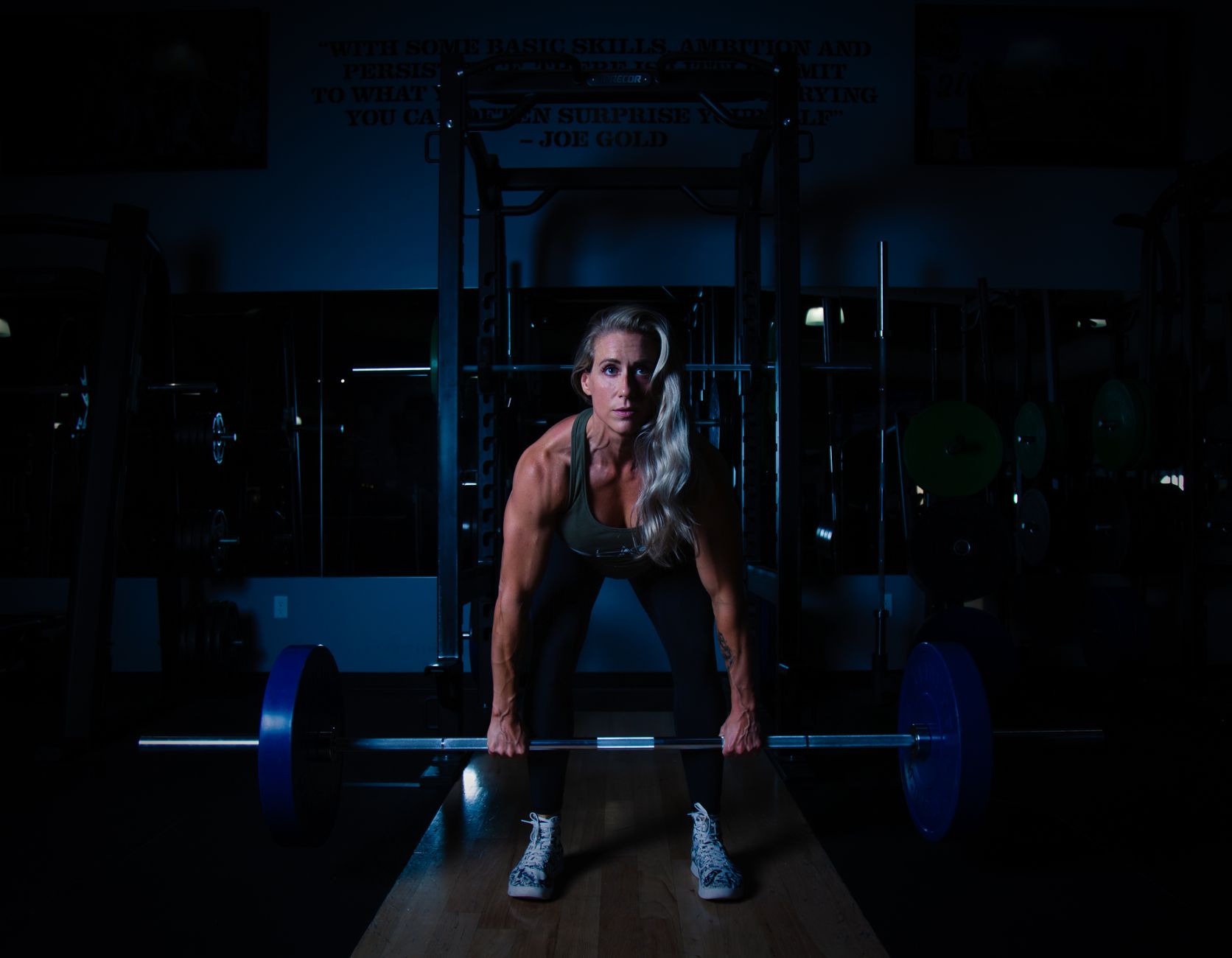
For years, the fitness message aimed at women was about shrinking: cardio to burn, classes to tone, a smaller number on the scale. The more useful message, the one the research actually supports, is almost the opposite. The single most valuable thing you can do for your body in your thirties and forties is build and keep muscle and bone, and strength training for women is the tool that does it. This isn’t about aesthetics or a smaller size. It’s about the body you’ll be living in at 60 and 70, and the window to invest in it is quietly closing while the old advice keeps pointing you at the treadmill.
Here’s the biological deadline nobody puts on a workout flyer. According to the National Institute on Aging, your body starts losing muscle mass and stops building new bone sometime in your late twenties. From then on, without intervention, both slowly decline, which is why so many injuries and so much frailty show up decades later. That decline isn’t destiny, though. Weight-bearing and resistance exercise directly counteracts it, and the effect is measurable: one controlled study found a statistically significant increase of about 1.82 percent in bone mineral density after six months of strength training, while the group that didn’t train saw no improvement at all. You are not stuck with the downward slope. You can bend it, but you have to load the muscles to do it.
Why muscle is the retirement account you can’t buy later
Think of muscle and bone the way you think of compound interest, because the analogy is closer than it sounds. What you build in your thirties and forties is what you get to draw down from in your seventies and eighties, and, like retirement savings, it’s far easier to accumulate earlier than to rebuild after a long neglect. Muscle is metabolically active tissue that supports your joints, stabilizes you against falls, and keeps everyday life, carrying groceries, getting off the floor, lifting a child, from becoming a strain. The loss of it, called sarcopenia, is one of the biggest drivers of lost independence in older age, and the loss of bone density sets up the fractures that so often begin a serious decline.
Resistance training addresses both at once through a genuinely elegant mechanism. When a muscle contracts hard against a load, it pulls on the bone it’s attached to, and that mechanical stress signals the bone to lay down more density right where the force is applied. So the same session that builds the muscle also strengthens the skeleton underneath it. Cardio is wonderful for your heart and mood, and it belongs in your life, but it does not send that build signal to your bones the way lifting does. This is the specific thing strength work provides that nothing else quite replaces.
The worked math on starting now versus later
Let me frame the timing in numbers, because the cost of waiting is the part people underestimate. Suppose bone and muscle are drifting down by a small percentage each year after your late twenties, and you have a choice to start resistance training at 35 or at 50. Starting at 35, you get fifteen extra years of building and maintaining before the steeper post-menopausal bone loss arrives, and you enter that harder phase, when the same hormonal shifts that disrupt sleep also accelerate bone loss, from a much higher baseline. Start at 50, and you’re trying to build on ground that’s already eroded for two decades, fighting a stronger downhill current. The study showing roughly 1.82 percent bone density gained in six months hints at the leverage available, but that gain lands very differently when it’s added to a strong base than when it’s clawing back years of loss. The exercise is the same. The dividend is enormous depending on when you start, and the best time is always earlier than it feels urgent.
It’s genuinely never too late to start
If you’re reading this in your fifties or later and feeling like the window already closed, the research has good news that’s worth hearing. Studies of resistance training in older and postmenopausal women consistently show meaningful gains in strength, muscle, and bone even when training begins well after the “ideal” early start. One body of work on older women found measurable improvements in body composition, bone mineral density, and functional fitness after just a few months of a structured resistance program. The earlier-is-better principle is real, but it describes a head start, not a locked door. The muscle and bone you can build at 55 still meaningfully change your strength and stability at 75, and the alternative, doing nothing, guarantees the decline you’re worried about.
That’s the reassuring flip side of the retirement-account analogy: unlike a literal retirement fund, your body responds to fresh deposits at almost any age. You cannot get back the years you didn’t train, but you can absolutely start compounding from wherever you are today.
What “lifting heavy” actually means here
Heavy is relative, and that’s the reassuring part. It doesn’t mean a competitive powerlifter’s barbell; it means a resistance that genuinely challenges your muscles in the last couple of repetitions of a set, whether that’s dumbbells, resistance bands, machines, or your own bodyweight to start. The general principle the research supports is progressive overload: challenging the muscle enough that it adapts, then gradually increasing the challenge as you get stronger, a couple of sessions a week hitting the major muscle groups. The exact loads and structure that are right for you depend on your health history and starting fitness, which is precisely the kind of thing worth setting up with a qualified trainer or physical therapist, especially if you have any existing conditions or injuries. If you’re managing a bone-density diagnosis or another medical issue, loop in your doctor before you begin, so the program fits your body rather than a generic template.
The mental shift is the hard part, not the movement. Picking up heavy things on purpose can feel like it belongs to someone else, some other kind of woman, when in fact it belongs to anyone who intends to stay strong and mobile for the long haul. Strength training for women isn’t a trend or a body-project; it’s basic maintenance on the only body you get, and it pays out for decades. The scale was always measuring the wrong thing. Muscle and bone are the numbers that matter, and unlike almost everything else about aging, they’re numbers you actually get to influence, starting with the first set you do this week.
Sources: National Institute on Aging (muscle and bone changes with age); peer-reviewed research on resistance training and bone mineral density (PMC); University of Maryland Medical System (strength training for women)