

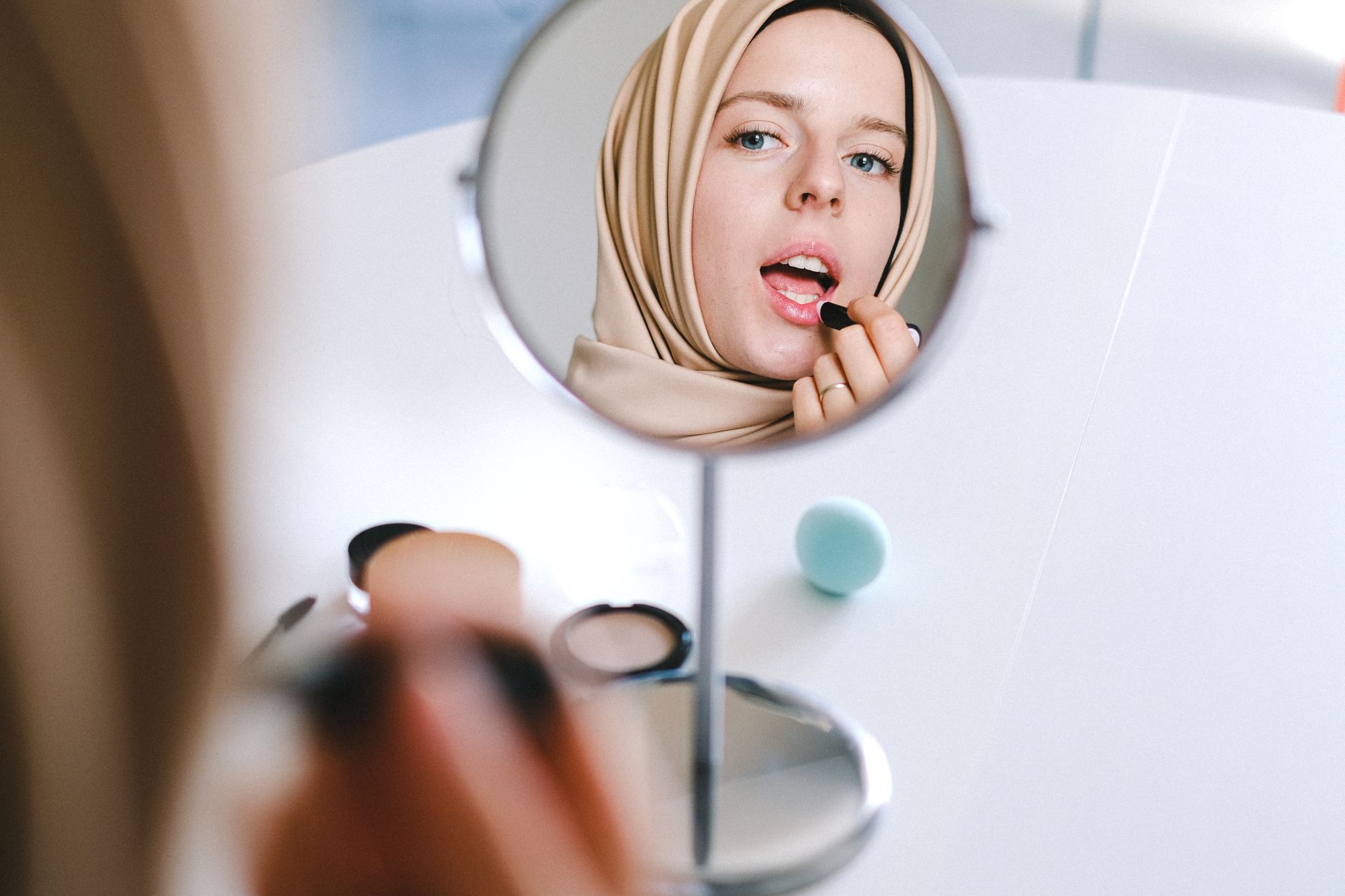
Your foundation isn’t melting because it’s cheap. It’s melting because you built it like a house with no foundation, in the one season that tests every shortcut you take. By 2 p.m. in August, the makeup sliding into your smile lines is doing exactly what physics told it to do. Sweatproof summer makeup isn’t a product you buy. It’s an order of operations, and almost everyone gets the first step wrong.
The first step is the one nobody wants to hear: sunscreen, applied like you mean it, as its own layer, before a single drop of anything else. Here’s the part that reframes the whole routine. The American Academy of Dermatology reports that most adults apply only 25 to 50 percent of the sunscreen needed to actually get the SPF printed on the bottle. That bottle of SPF 50 you trust? At the amount you’re realistically using, it’s behaving more like SPF 15 to 25. Now stack a “foundation with SPF 25” on top and call it protected, and you’ve talked yourself into a number that was never real. The SPF in your foundation is a rounding error you apply in a thin, uneven film. It is not your sun protection. It never was.
Why the foundation with SPF in it is lying to you
To hit the SPF on a foundation label, you’d need to apply roughly the same thickness dermatologists recommend for actual sunscreen, which is about a quarter teaspoon for the face. Nobody trowels on foundation like that. You apply a whisper of it, blend most away, and end up with a fraction of the stated protection. So the move is to stop asking your makeup to do two jobs badly. Let sunscreen be sunscreen. A dedicated facial SPF like EltaMD UV Clear (around $43 and endlessly recommended by dermatologists) or the budget hero Trader Joe’s Daily Facial Sunscreen (about $9, and a near-clone of a far pricier Korean formula) goes on first, gets two full minutes to dry, and becomes the actual base your makeup grips.
That drying window matters more than any single product you own. Makeup applied onto wet sunscreen has nothing to hold, which is why it pills, slides, and pools. Two minutes of patience is the cheapest upgrade in your bag.
The setting spray is where the science actually lives
Once your base is dry, the thing standing between you and a melted face by lunch is not your foundation’s price tag. It’s alcohol content. Setting sprays that genuinely hold through heat lean on a high proportion of denatured alcohol, which flashes off fast and leaves behind a flexible film that locks pigment in place. This is why One/Size On ‘Til Dawn ($32) keeps turning up in the bags of people who sweat for a living, from wedding photographers to theme-park employees. Its mattifying, waterproof formula is built to survive humidity, and it does.
But the interesting part is what sits one shelf over. L’Oréal Infallible 3-Second Setting Mist runs about $16 and claims up to 36 hours of water- and sweat-resistant wear. The reason the drugstore version competes is boring and worth knowing: L’Oréal owns a stack of prestige brands, and setting-spray and long-wear technology moves between the labs more than the marketing admits. The polymers that make a $32 mist grip are chemical cousins of the ones in the $16 one. Once you know that, half your beauty budget starts looking negotiable.
The real-money math on lasting power
Let me show you the arithmetic, because “worth it” is a number, not a vibe. Say you do full makeup twice a week through a hot summer, roughly 26 applications from June through August. A bottle of the One/Size spray is $32 for 3.4 ounces and, at a couple of spritzes per face, easily covers a full summer of that cadence, so you’re spending around $1.23 per made-up day on the thing doing the heaviest lifting. The L’Oréal mist at $16 for the same size lands near $0.62 per day. Neither number is the tragedy. The tragedy is the $52 “long-wear” foundation you bought to compensate for a setting step you skipped, then reapplied twice by noon anyway because nothing underneath it was locked down. Fix the spray and the drying time, and the foundation you already own suddenly performs like the expensive one you were about to buy.
For the foundation slot itself, the workhorse is L’Oréal Infallible 32HR Fresh Wear (about $16), a breathable, transfer-resistant, genuinely sweat-tested formula. Set it, don’t drown it. A light hand plus a locked base beats a heavy hand every time the temperature climbs.
Powder where you crease, nowhere else
Heat makeup fails at the hinges: the sides of the nose, the inner corners, the smile lines, wherever skin folds and oil pools. Blotting a translucent powder into only those zones (a Coty Airspun classic runs about $7 and has done this job for eighty years) stops the slide without turning your whole face to chalk. Full-face powder in a heat wave reads flat and cakey the second you sweat through it. Targeted powder reads like skin that simply refuses to quit.
There’s a reapplication reality worth building around, too. Survey data compiled by the AAD found that a large share of people never reapply sun protection through the day, and reapplication drops even further when it’s cloudy. Since you’re not going to smear sunscreen over full makeup at your desk, a mineral SPF powder brushed on midday (Supergoop (Re)setting Powder, about $35, or Colorescience Sunforgettable if your budget stretches) is the one honest way to top up protection without wrecking the face you built. It’s the only powder in this routine pulling double duty, and it’s the one worth the splurge.
What actually survives the heat
Strip away the marketing and sweatproof summer makeup comes down to four unglamorous truths: sunscreen is its own step and your foundation’s SPF doesn’t count, drying time is non-negotiable, the setting spray’s alcohol content is doing the real work, and powder belongs only where you crease. Do those in order and a heat wave stops being the thing that defeats your face by lunch. The friend whose makeup somehow looks intact at the end of a sweltering day isn’t wearing better products than you. She’s just refusing to skip the two minutes everyone else is too impatient to wait.
Sources: American Academy of Dermatology (sunscreen application and reapplication statistics), Skin Cancer Foundation, TODAY (sweat-proof beauty expert roundup), CNN Underscored (setting spray testing), L’Oréal Paris