

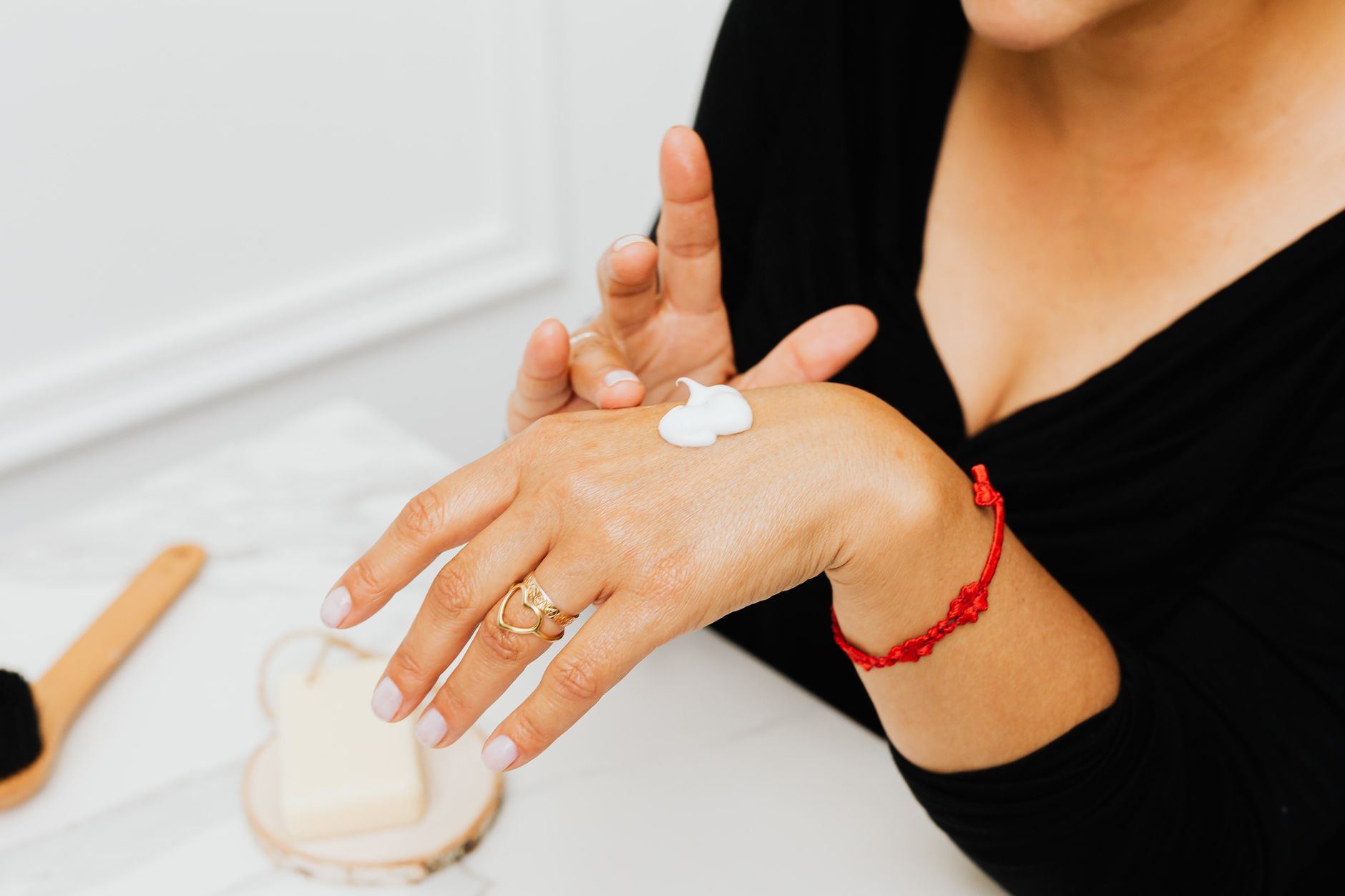
In a Cleveland hospital study, healthcare workers who joined in the cold months developed irritated, cracked hands at 2.76 times the rate of those who joined in the warm months. Their soap didn’t change between seasons. The air did, and so did the number of times they washed. That is why the search for the best hand cream for cracked hands goes sideways every November. We shop for the tube when the problem is the schedule. A plain $5.97 fragrance-free cream applied after every wash will do more for your knuckles this winter than a $34 tube you rub in once before bed, and the math on that is less dramatic than you’d think.
Your hands get a little worse with every single wash
The study behind that 2.76 figure was published in Dermatitis in 2013. Researchers at University Hospitals in Cleveland followed 113 healthcare workers, who washed about 12 times a day on average. Two findings matter for the rest of us. People who washed at least 10 times a day developed irritant hand dermatitis at nearly twice the rate of people who washed less (an adjusted incidence rate ratio of 1.95). And when the researchers treated washing as a sliding scale, each extra daily wash raised the rate by about 4%.
Four percent per wash is the number to hold on to. Damage builds a little at a time, wash after wash, all day long. A thick cream at bedtime treats the total after the fact. Cream after each wash keeps the total from building up in the first place.
This isn’t a niche problem. A 2021 meta-analysis in Contact Dermatitis pooled 66 studies covering 568,100 people and put the one-year prevalence of hand eczema at 9.1%. Women get it about 1.5 to 2 times as often as men. Flu season, norovirus season, holiday cooking and a sink full of roasting pans all land in the same eight weeks, and each one sends you back to the faucet.
What dermatologists say, and what the product roundups skip
The American Academy of Dermatology’s advice for hands dried out by frequent washing is short. Wash, then “apply hand cream or ointment to your damp skin,” immediately. If you use hand sanitizer, put cream on as soon as it dries. The AAD also says to look for a product with mineral oil or petrolatum that’s labeled fragrance-free and dye-free, and to pick one in a tube or tub instead of a pump bottle, since pumps usually hold thinner lotions.
Read most winter hand cream lists and you’ll find dozens of products and very little about timing. NBC Select’s December 2025 roundup has 24 picks running from a $2.79 Gold Bond tube to a $62 overnight treatment. Its dermatologists do say not to overwash and to wear cotton gloves overnight. What no list puts a number on is how many applications a day you need and what that does to your budget.
Fragrance is worth checking before you get to the math. L’Occitane’s Shea Butter Hand Cream ($34 for 150 mL at Sephora) is a cult favorite and a common holiday gift. Its ingredient list includes parfum along with linalool, limonene and geraniol. That’s fine if your hands are just a bit dry. If they’re already split at the knuckles, it goes against the AAD’s fragrance-free advice. If you’ve read our piece on why the best lip balm is a one-ingredient jar, the pattern will sound familiar: the things that make a product pleasant to use can work against the repair.
The winter math on cheap hand cream
Here’s the worked example, with real prices and a dose you can actually measure.
Dermatologists measure cream in fingertip units: a line squeezed from the tip of an adult index finger to the first crease. DermNet puts one fingertip unit at about 0.4 grams for an adult woman and says one hand takes one unit. For a quick after-wash coat I’ll assume half that textbook dose, one fingertip unit spread across both hands, or 0.4 grams per application.
Say you wash eight times a day this winter (an illustrative number, lower than the hospital workers’ 12). That’s 3.2 grams of cream a day. From today, November 18, to the first day of spring on March 20 is 123 days, so the season takes 393.6 grams.
Neutrogena’s Norwegian Formula Hand Cream, fragrance-free and built on glycerin, costs $5.97 for a 2-ounce (56.7-gram) tube at Walmart. One tube lasts about 17.7 days at that pace, so you’d use 6.9 tubes, round up to 7, for $41.79 over the winter. That’s about 34 cents a day.
Use the L’Occitane tube the same way and the same 393.6 grams takes 2.6 tubes, so you buy 3, for $102. Use it once a night instead, at 0.4 grams, and one $34 tube covers the whole winter with a third left over.
So the cheap tube after every wash costs about $8 more than the luxury tube once a night. The difference is that you get roughly 984 applications instead of 123. That’s eight times the coverage for about a quarter more money, and every one of those applications lands right after the wash that caused the damage. If you’d rather use the nice cream at the same frequency, you’re looking at $102. That’s a reasonable gift to yourself, but nothing about the formula requires it.
Where the cream lives matters more than which one you bought
Once you accept that frequency is the fix, buying one big jar for the bathroom stops making sense. Seven tubes over a winter works out to roughly one every two and a half weeks, and it helps to spread them out: one by the kitchen sink, one by the bathroom sink, one in your bag, one at your desk. Cream has to be within reach while your hands are still damp, because the AAD’s “immediately” means seconds, not the next time you walk past the bedroom.
The kitchen tube matters most this month. Thanksgiving prep means handling raw turkey, scrubbing pans and wiping counters, often with hot water and dish soap, which NBC’s dermatologists say to keep away from your hands. Wear dish gloves for the pans, then rinse, pat dry and put cream on before you start the next dish.
A bedtime layer still helps, just as a supplement. A petrolatum ointment such as CeraVe Healing Ointment ($9.99 at Ulta) under cotton gloves gives you hours of contact without anything washing it off. Our winter humidity guide covers the other half of the problem: air heated from 20°F outside can drop to single-digit humidity indoors, and that pulls water out of your skin between washes too.
When it isn’t just dry skin
Cracks that bleed, blisters, itching that keeps you up, or skin that doesn’t improve after two weeks of cream after every wash are reasons to see a dermatologist rather than buy a stronger cream. Allergic contact dermatitis, sometimes to an ingredient in the hand cream itself, can look exactly like plain dryness. Hand eczema is common enough (9.1% of people in a given year) that it’s worth a professional opinion.
For everyone else, the best hand cream for cracked hands is the one that’s already next to the sink when you turn off the water. Buy the plain, fragrance-free tube in multiples, put one wherever you wash, and save the beautiful jar for the nightstand.