

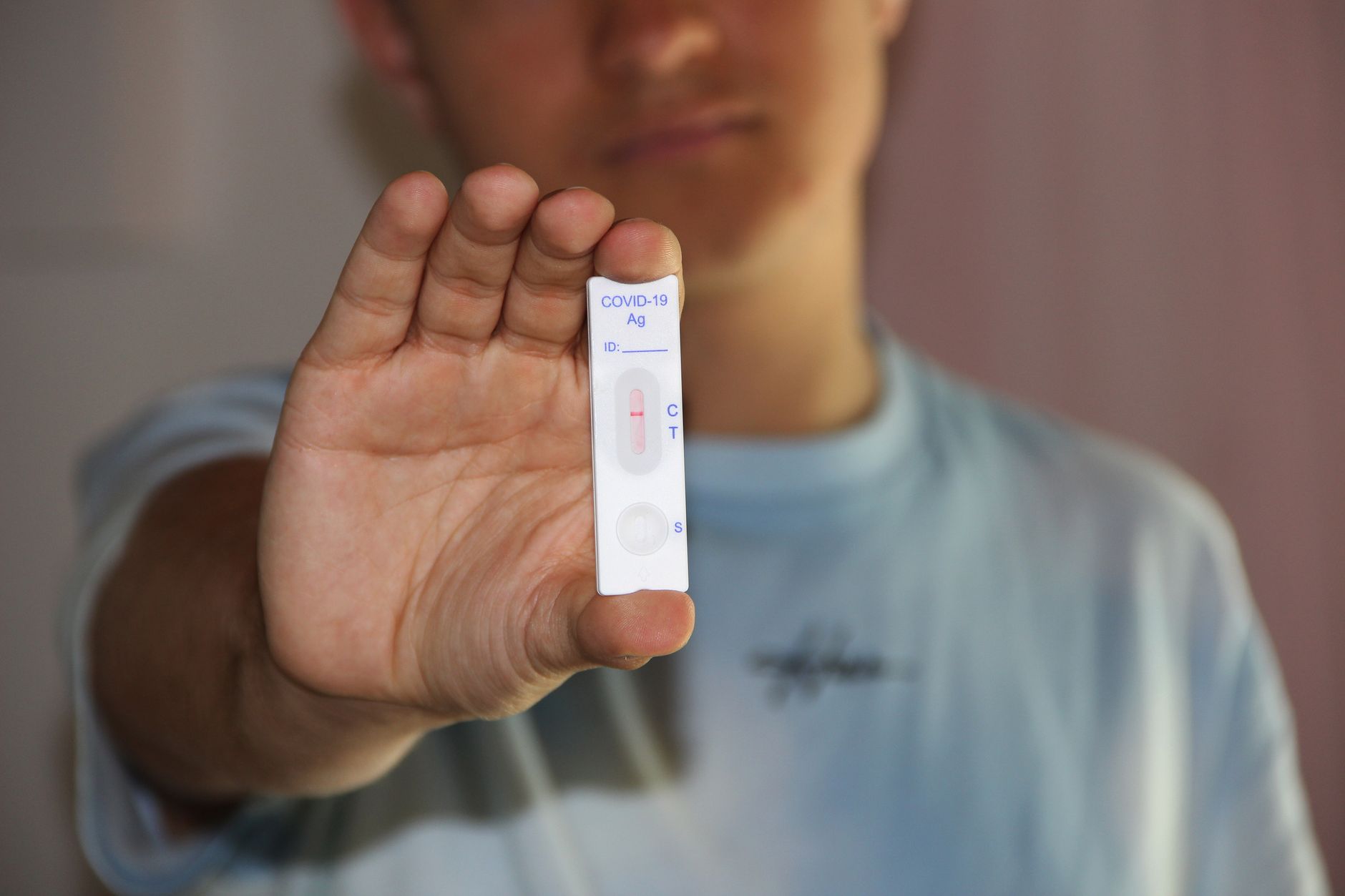
The most common Thanksgiving testing ritual goes like this: everyone swabs in the kitchen at noon, waits fifteen minutes, sees one line, and hugs. It feels responsible. It also misses roughly two out of three infections in people who feel fine. In the largest at-home testing study the FDA and NIH have run, a single rapid antigen test caught just 34.4% of asymptomatic COVID infections. If you’re planning a COVID test before Thanksgiving this year, the box you buy matters less than the day you open it, and who you hand the swabs to.
That’s the case for a different plan. Save most of your tests for whoever has symptoms, start the clock 48 hours earlier than feels necessary, and treat a negative flu result on a combo test with a lot more suspicion than a negative COVID one.
A COVID test before Thanksgiving works best when it starts two days early
The study behind current FDA guidance is Soni and colleagues in the Annals of Internal Medicine (2023). It enrolled 7,361 people between October 2021 and January 2022, had them swab every 48 hours for two weeks, and checked every rapid result against a lab PCR. For people with symptoms, one rapid test caught 82.5% of infections. A second test 48 hours later pushed that to 93.4%. For people without symptoms, the numbers were much worse: 34.4% with one test, 55.3% with two, 68.5% with three.
Those results are why the FDA’s safety communication tells people with symptoms to test at least twice, 48 hours apart, and people who were exposed but feel fine to test at least three times, 48 hours apart. The guidance has been in place since 2022. Almost every “should I test before Thanksgiving” article still ranking on Google was written in 2020 or 2022 and stops at “test close to the event.” That’s half the instruction. The other half is that one test, alone, is a weak screen when nobody feels sick.
So put it on a calendar. Thanksgiving falls on Thursday, November 26. If you want the three-test asymptomatic protocol to finish the morning of dinner, your first swab is Sunday, November 22, the second is Tuesday the 24th, and the third is Thursday morning. If someone wakes up with a scratchy throat on Tuesday, that person tests Tuesday and again Thursday. Anyone flying in on Wednesday night has already missed the first two slots, which is worth knowing before you promise your mother the house is “tested.”
The money math says aim your tests at whoever is sick
Here’s what the different plans cost. An iHealth COVID-19 antigen two-pack was $14.17 at Walmart this week, about $7.09 a test.
Plan one is the kitchen ritual. A household of four each tests once on Thursday. That’s four tests, two boxes, $28.34, and against silent infections it buys you 34.4% sensitivity. Plan two is the full FDA asymptomatic protocol for all four people: three tests each, twelve tests, six boxes, $85.02, and it gets you to 68.5%. You tripled the spend and doubled the catch rate, and you still miss nearly a third of silent infections.
Plan three is one box, $14.17, handed to the one person in the house who has symptoms, used Tuesday and Thursday. That pair of tests catches 93.4% of infections in someone with symptoms. For one-sixth the cost of plan two, you get a far more reliable answer about the person most likely to be contagious.
None of this means testing healthy people is pointless. If Grandpa is 88, or someone at the table is pregnant or getting chemo, the extra $57 to run the full three-test protocol for everyone might be the best $57 you spend all month. But for most families, the reflex to test everyone once spreads the box thin across the people least likely to give you a useful answer. Keep a spare box so whoever starts sniffling on Tuesday can get the two-test sequence, and you’ve covered the scenario that matters most.
If you haven’t had your flu shot yet, it’s not too late, and our breakdown of flu shot timing explains why a November shot still covers February well.
The flu half of a combo test is the half to doubt
COVID and flu combo tests are now easy to find on drugstore shelves, and plenty of people will grab one this year because they cover two viruses for one swab. The COVID side is what the FDA study measured. The flu side has a different track record.
The CDC’s clinician guidance puts the sensitivity of traditional rapid influenza antigen tests at roughly 50 to 70% compared with PCR, and says plainly that false negatives are common when flu is circulating widely. FDA now requires newer rapid flu tests to reach at least 80% sensitivity, which is better, but it still means a meaningful share of real flu cases read negative. The CDC’s 2026-27 season outlook, published September 23, expects a moderate flu season with hospitalizations typically peaking between December and February, which puts Thanksgiving right at the front edge.
The bigger problem is timing. Flu antivirals work best when started within two days of getting sick, according to the CDC, and can shorten illness by about a day. The 48-hour retest rule that makes sense for COVID can quietly eat that whole window for flu. If you feel feverish and achy on Monday and your combo test reads negative for both, waiting until Wednesday to retest means you may be past the point where a prescription would help most.
So the practical move is different for each virus. A negative COVID result while you feel sick means test again in 48 hours. A negative flu result while you feel sick, especially if you’re pregnant, have asthma, diabetes, or heart disease, means call your doctor or a telehealth line that day and describe your symptoms instead of trusting the strip. Some clinics can run a rapid molecular test, which the CDC describes as having much higher sensitivity than the antigen kind.
Last winter’s leftover box may still count
Before you buy anything, dig out the tests from last season and read the date. The FDA keeps a table of every authorized at-home COVID test, and for some brands the expiration column links to an “Extended Expiration Date” notice, so a box that looks expired may have been granted more shelf life. For most others, the table simply says to go by the date printed on the box. Five minutes on that page can save you $14.17, or keep you from trusting a strip that’s truly past its date. And read the result at the exact time the instructions give, not early: the FDA study ran every test as directed, and its numbers only hold if you do too.
A good Thanksgiving test plan tests on purpose, not more
Decide now who in your family is high risk, because that’s the group that justifies the full three-test protocol for everyone. Give the symptomatic person priority on swabs, and start the 48-hour count on Tuesday at the latest. And if the flu side of a combo test says negative while you feel terrible, pick up the phone rather than waiting two days to swab again.
A COVID test before Thanksgiving is still worth doing. One test at the door just isn’t the screen most families think it is, and knowing the actual numbers lets you spend $14.17 where it counts. If you’re cooking, here’s how long those leftovers stay safe once dinner’s done.
This article is general information, not medical advice. If you’re sick or at higher risk for complications, talk to your doctor about testing and treatment.