

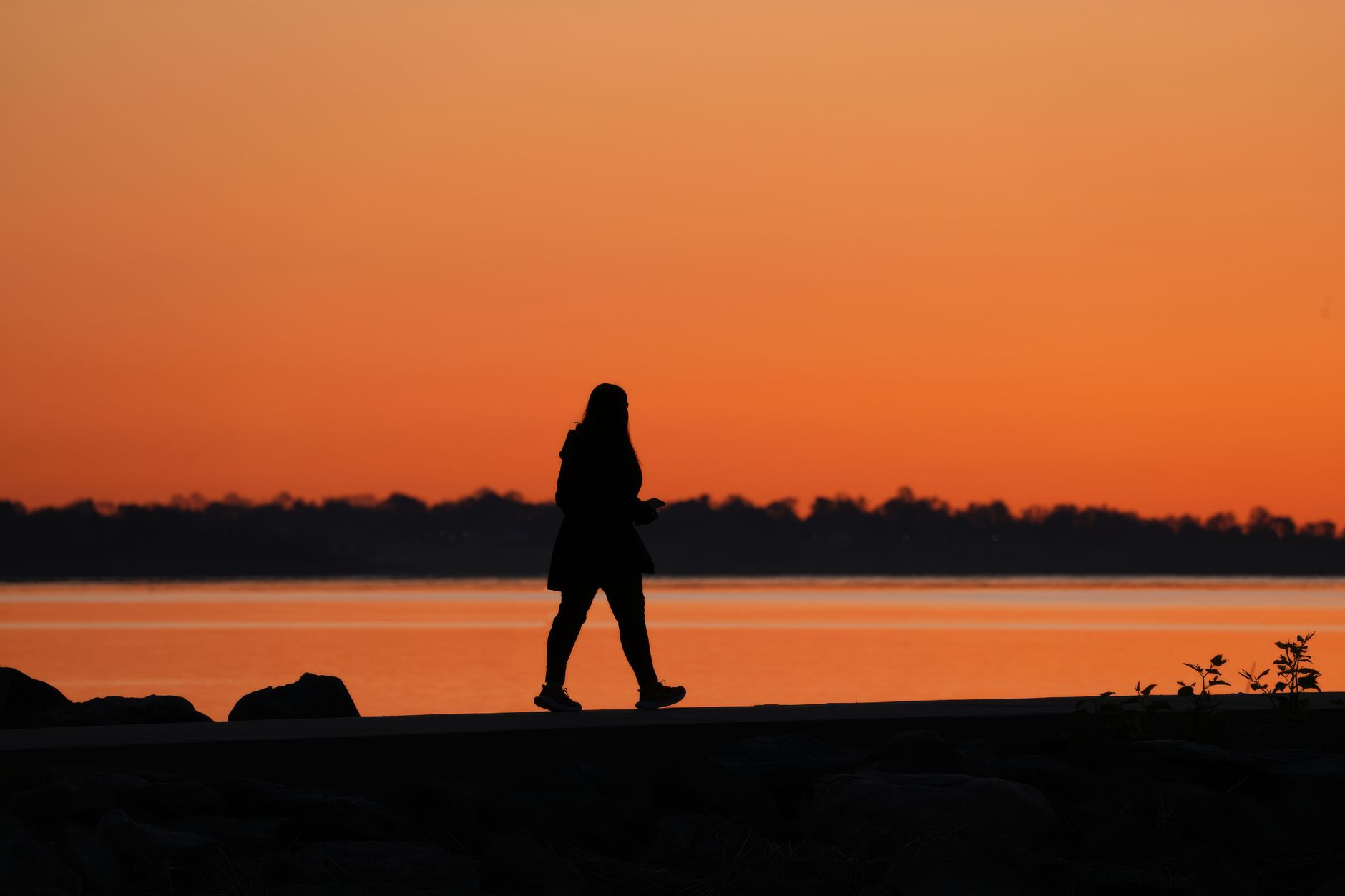
On July 14, the House voted 308 to 117 to make daylight saving time permanent. The Senate never took it up. So at 2 a.m. on Sunday, November 1, your phone will quietly roll back to 1 a.m., and every article you read that week will say the same thing: enjoy the bonus hour, shift bedtime by 15 minutes, get some morning sun. Fine advice, aimed at the wrong half of the day. When daylight saving time ends in 2026, the part that deserves a plan isn’t Sunday morning. It’s 5:30 p.m. on Monday, and the 70 or so weekday evenings after it.
The extra hour of sleep mostly never shows up
The bonus hour is smaller than advertised. A University of Bristol team tracked about 11,800 UK Biobank participants wearing activity monitors through the clock changes of 2013 to 2015 and published the results in the Journal of Sleep Research in 2024. After the autumn change, people gained roughly 30 minutes on average, not 60. The detail that caught my eye: women often slept less on weekdays after the clocks changed, while men tended to sleep more.
Harvard Health’s summary of Yvonne Harrison’s review in Sleep Medicine Reviews lands in the same place. A one-hour shift can unsettle sleep for up to a week, with earlier waking and more middle-of-the-night wake-ups, and short sleepers and early risers have the hardest time adjusting. So keep your alarm where it is that week. But a slightly rough week of sleep fixes itself. The bigger change starts when you leave work.
Your 5:30 walk home goes from daylight to dark over one weekend
Take Chicago, using standard astronomical sunset and civil dusk times for 2026. Civil dusk is the point where it’s dark enough that cars need headlights. On Friday, October 30, the sun sets at 5:46 p.m. and dusk falls at 6:16. On Monday, November 2, sunset is 4:43 p.m. and dusk is 5:12. Leave the office at 5:30 and Friday’s walk to the train starts 46 minutes before dusk. Monday’s starts 18 minutes after it. Same street, same shoes, same time on the clock, and a completely different visibility problem.
Unlike the sleep wobble, this one doesn’t fade in a week. Count the weekdays from November 2 until dusk drifts back past 5:45 p.m. and Chicago gets 71 of them, running to about February 8, 2027. New York gets 67 (through February 2), Seattle 66. Knock off a few for Thanksgiving and the holidays and you still have roughly 14 weeks of commutes home in the dark. Farther south the window shrinks: Atlanta’s dusk on November 2 is 6:10 p.m. and never comes earlier than about 5:56, even in December.
Why daylight saving time ending matters most on foot
NHTSA’s Traffic Safety Facts on 2024 crash data, released in June 2026, counted 7,080 pedestrians killed on U.S. roads. Seventy-six percent of those deaths happened in the dark, against 20 percent in daylight. The Governors Highway Safety Association found nighttime pedestrian deaths climbed 84 percent between 2010 and 2023 (from 3,030 to 5,578), while daytime deaths rose 28 percent.
The Federal Highway Administration explains the mechanism with one number: a pedestrian in dark clothing is first seen at about 55 feet. FHWA’s example is a driver doing 60 mph, who then has under a second to react and needs more than 260 feet to stop. Run it at a city-street 30 mph instead. Thirty miles an hour is 44 feet per second, so 55 feet disappears in 1.25 seconds. That’s the entire gap between a driver noticing a shape and the car reaching the spot where you’re standing. FHWA adds that eight in ten drivers who struck someone at night didn’t see them, and that seeing a car’s headlights tells you nothing about whether the driver sees you.
An $11 pair of ankle bands beats a white coat
The instinct is to wear something light. FHWA says that isn’t enough: a person in white may not be visible until well inside 200 feet. Reflective material behaves differently because it sends headlight beams back toward the driver instead of scattering them.
Placement matters more than coverage, which surprised me. In a 2009 closed-road study in Accident Analysis & Prevention, Richard Tyrrell, Joanne Wood and colleagues found that pedestrians with reflective markers on their major joints were recognized more often and from farther away than pedestrians in a reflective vest. The idea is called biological motion: points of light swinging at the wrists and ankles move like a walking human, and a vest just looks like a rectangle.
So the most useful thing I’d buy this week is boring. Nathan’s Reflex slap bands are $11 a pair at REI. Wear one on each ankle, or one ankle and one wrist. Spread across Chicago’s 71 dark walks home, that’s $11 divided by 71, about 15.5 cents a commute. If you drive, the same 55 feet applies from the other side of the windshield, so the first few weeks of November are a good time to take the residential streets slower than feels necessary.
The darker evenings weigh on mood for weeks, not days
The second cost is quieter. A Danish team led by Bertel Hansen looked at 185,419 hospital contacts for depression between 1995 and 2012 and published the findings in Epidemiology in 2016. The switch from summer time to standard time was followed by an 11 percent rise in depressive episodes, an effect that faded after about 10 weeks. The spring switch showed no matching bump. Losing light in the late afternoon, when most of us are awake and out, seems to matter more than the hour itself.
Ten weeks lines up uncomfortably well with that 71-commute stretch. If November usually drags you down, set up your light before it arrives. Morning daylight gets easier after the change, because sunrise jumps an hour earlier on the clock. Our guide to light therapy for seasonal affective disorder covers lamp distance and timing, and our piece on the sleep hormone connection in women explains how evening light pushes melatonin around. If low mood hangs on for more than a couple of weeks or starts bleeding into work or relationships, that’s a conversation for your doctor, not a lamp.
Sleep doctors actually prefer the time we’re switching to
The odd part is who wants which clock. The American Academy of Sleep Medicine’s 2024 position statement in the Journal of Clinical Sleep Medicine calls for ending seasonal clock changes in favor of permanent standard time, the exact setting we move into on November 1, because it “aligns best with human circadian biology.” Bright mornings anchor your body clock. The House bill would do the opposite and lock in daylight time, though Senators Steve Daines and John Thune have both signaled it isn’t going anywhere. Either way, the dark late afternoons arrive in 11 days, and no vote changes how dark 5:30 p.m. is on a Chicago sidewalk.
My plan for when daylight saving time ends in 2026, which you are welcome to steal: keep the alarm at the same time that first week and stop counting on a full bonus hour. Put reflective bands in your work bag on Friday, October 30, while you can still see what you’re doing. Get outside in the morning while sunrise is early. And treat the walk from the office to the train as the riskiest 15 minutes of your day, because until February it happens in the same light as three out of every four pedestrian deaths.