

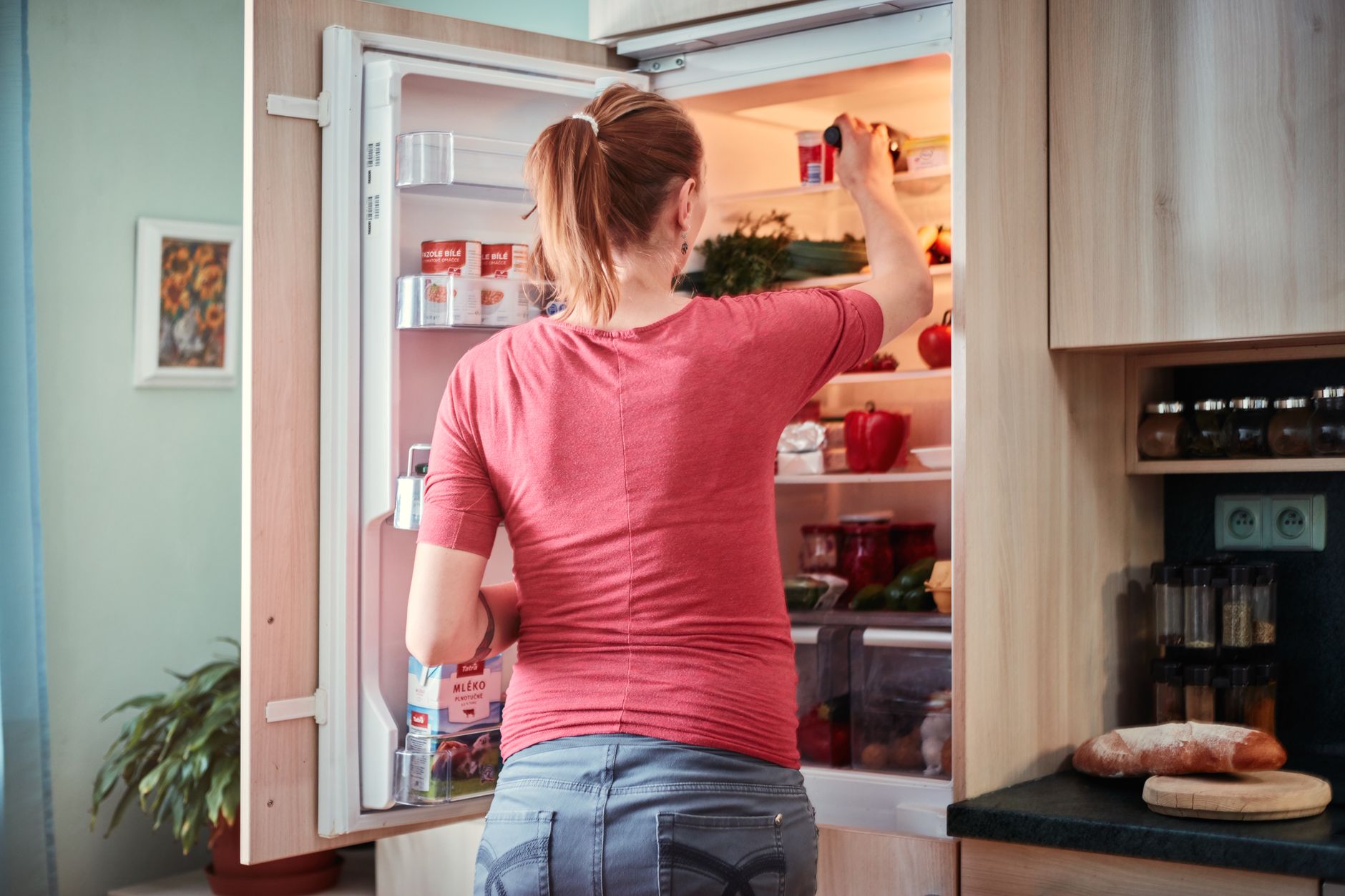
On July 1, California made it illegal to print “Sell By” on a package of food a shopper will pick up off a shelf. Not discouraged. Illegal, with fines running up to $1,000 per violation. If you have ever poured a gallon of milk down the drain because of three numbers stamped near the cap, that law was written with you in mind. Food expiration dates have never meant what most of us assume they mean, and the industry is finally being made to say so in writing.
The number to start with is $728. That is what the Environmental Protection Agency put on the average American’s uneaten food in its April 2025 cost report, counting groceries at home and meals out. For a household of four the same report lands near $3,000 a year. Some of that food was genuinely spoiled and had to go. A big share of it was fine, and it went into the bin because of a printed date that was never a safety warning in the first place. We have been dutifully obeying a number that was addressed to somebody else.
“Sell By” was a note to the stock clerk, not to you
With the single exception of infant formula, federal law does not require a date on food at all, which surprises nearly everyone I mention it to. The USDA’s Food Safety and Inspection Service is blunt about it: dates are not an indicator of a product’s safety, and manufacturers apply them voluntarily. “Sell By” is inventory language. It tells the store how long to keep something on display so the buyer gets a reasonable amount of shelf life at home. It was never addressed to the person holding the carton.
What that means in practice is more generous than most of us behave. FSIS guidance puts milk at roughly a week past its sell-by date, stored properly. Eggs get three to five weeks past theirs. That guidance comes from the agency that regulates the American meat and poultry supply, and it says plainly that the number on the carton is not the number that matters. What matters is whether the food has been kept at 40 degrees or below, and whether it smells and looks like itself.
Your food expiration dates are changing this year even if you live nowhere near California
California’s AB 660 took effect on July 1, 2026, and it replaced the whole confusing vocabulary with two phrases. “BEST if Used By” now signals quality, meaning the crackers might go soft after it but nothing is going to hurt you. “USE by” signals safety, and that one you obey. Consumer-facing “Sell By” is gone, with a narrow carve-out for coded inventory dates a shopper would not be able to read anyway.
What happens outside California matters more. Food manufacturers do not run a separate print job for one state, even a state with nearly forty million people in it. They harmonize the label and ship the same package everywhere, which is exactly how Proposition 65 warnings ended up on products in Ohio. So the yogurt in your fridge in Atlanta is going to start carrying California’s wording without anyone announcing it. A federal version, the Food Date Labeling Act, was introduced with bipartisan support in July 2025 and has not passed, so for now one state is doing the work for everybody.
The confusion got worse over the past decade, and my age group is the worst offender
I assumed this problem was slowly solving itself. It is not. Researchers at Harvard Law School’s Food Law and Policy Clinic, ReFED, and the Johns Hopkins Bloomberg School of Public Health ran a national survey through The Harris Poll in January 2025, polling more than 2,000 adults and repeating a question set first asked in 2016. In 2025, 43 percent of people said they always or usually throw away food close to or past the package date. In 2016 it was 37 percent. Nearly nine in ten now do it at least occasionally.
The generational split is the part I did not see coming. Gen Z came in at 52 percent and Millennials at 51 percent, while Baby Boomers sat at 32 percent. Parents of kids under 18 hit 53 percent. The people most likely to trash a slightly-past-date container are the ones who grew up with the most food safety messaging, and the people least likely to do it are the ones who learned to open the carton and smell it. ReFED puts the national cost of this specific confusion at roughly three billion pounds of food and $7 billion a year.
What $198 a year in tossed milk and eggs looks like on a receipt
National totals are easy to shrug at, so price out one small, boring habit instead. Twice a month you clear out a gallon of milk, a dozen eggs, and a loaf of bread because the dates have passed. At the Bureau of Labor Statistics average prices for June 2026, whole milk ran $4.32 a gallon, large Grade A eggs $2.14 a dozen, and white bread $1.81 a loaf. That is $8.27 per cleanout. Twice a month makes $16.54. Over a year, $198.48.
Now hold that against the FSIS guidance. The milk was good for about another week. The eggs had three to five weeks left. The bread, if it was not visibly moldy, was fine and would have been better than fine in the freezer. So the honest accounting is that roughly $198 walked out of a single kitchen, on a schedule, in exchange for nothing. That is two weeks of groceries for one person, and it is the cheap version of the habit. Add the half-bag of spinach and the container of sour cream you bought for one recipe and the figure climbs fast. Most meal planning advice focuses on what you put in the cart. The bigger leak is at the other end.
The two-label system only works if you know which one to obey
Two phrases only help if you treat them differently, and treating them the same is exactly what most of us will keep doing. “USE by” earns your respect, especially on ready-to-eat refrigerated things like deli turkey, hot dogs, smoked salmon, and soft cheeses, because Listeria happens to be one of the few pathogens that keeps growing at refrigerator temperature. There is no judgment call on infant formula either, since that is the one date federal law actually requires. “BEST if Used By” is a manufacturer’s promise about crunch and color and flavor. Ignore it and your crackers go stale. They do not turn on you.
The variable nobody prints on the package is your refrigerator. Every one of those guidelines assumes 40 degrees Fahrenheit or below, and plenty of home fridges idle at 43 or 45, which quietly shortens everything. An appliance thermometer costs about eight dollars and settles the question permanently. The other move that pays immediately is treating the freezer as a pause button rather than a graveyard. Bread, shredded cheese, butter, cooked beans, and most cooked proteins freeze without complaint, and the FSIS position is that food kept frozen at zero degrees stays safe indefinitely, with quality being the only thing that slowly degrades.
None of this requires a system or an app. It requires knowing that food expiration dates on most of what you buy are a quality estimate written by a marketing department and a food scientist, not a verdict. California just forced the packaging to admit it. The savings show up in the same place they always did, which is the money you stop spending twice on the same groceries, and that money is more useful sitting in a sinking fund than going out with the trash on Thursday.