

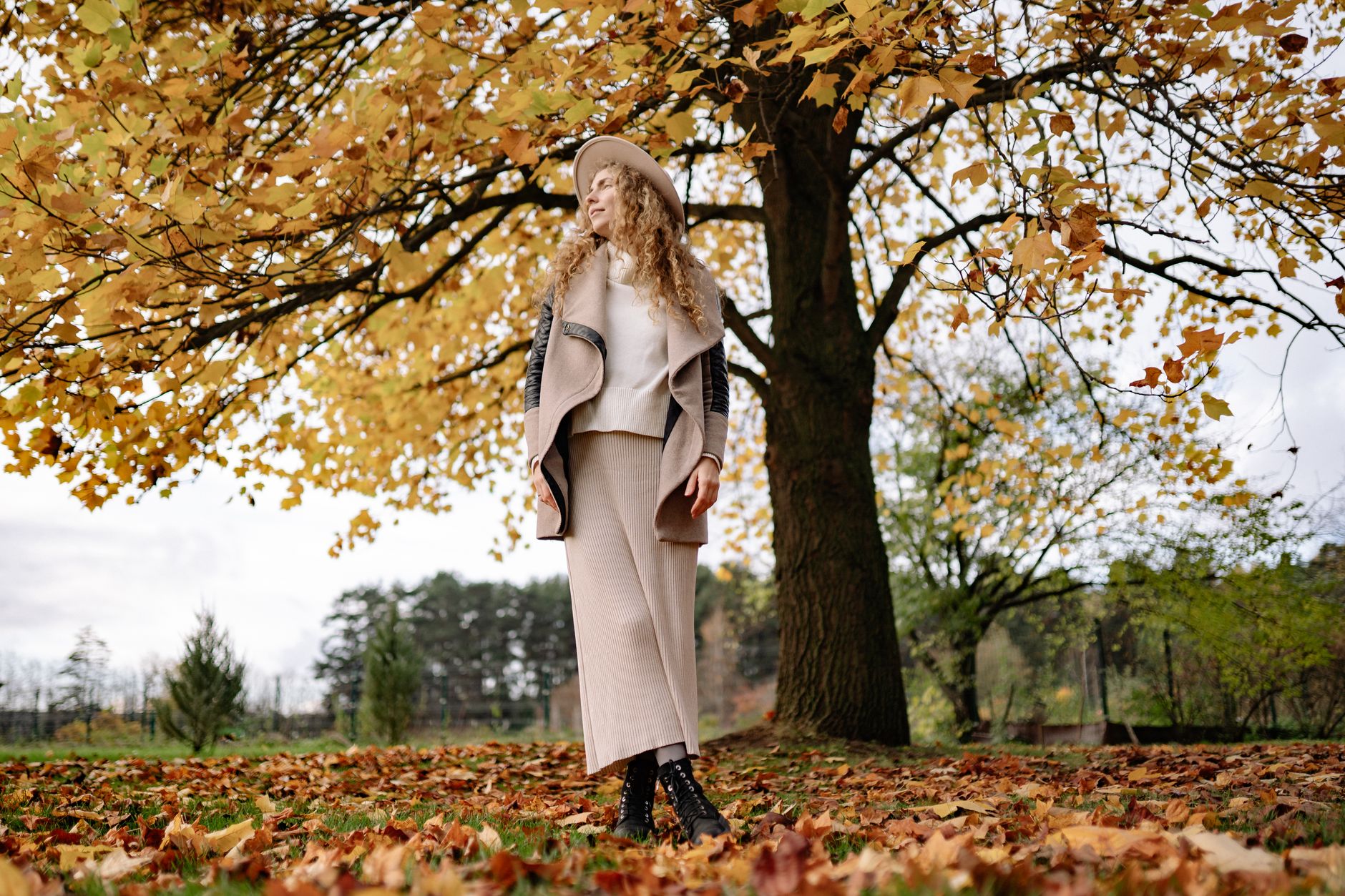
Every September, the same trap springs. The new arrivals hit, the trend content ramps up, and you buy a pile of fall wardrobe essentials that photograph beautifully and then quietly join the graveyard of clothes you never actually reach for. There’s a well-documented reason this keeps happening, and understanding it changes how you should shop for the season. Most women wear only about 20 percent of their wardrobe roughly 80 percent of the time, according to research from the styling company Pareto, which studied the closets of hundreds of women. The other 80 percent hangs there, purchased and ignored. A fall refresh that works doesn’t add to the dead 80. It deepens your living 20.
The reason we cling to that small rotation isn’t laziness, it’s biology, and it’s worth knowing because it tells you what to buy. Your brain evolved to conserve energy and avoid unnecessary risk, and standing in front of an overstuffed closet at 7 a.m. reads to your tired mind as exactly that kind of risk. So you grab the reliable, easy outfit and leave the pretty, fussy, or unproven pieces for a “later” that rarely comes. More clothes don’t fix this; they make it worse, because every additional option adds friction to the daily decision. The goal of a smart seasonal update is fewer, better pieces that slot straight into the reliable rotation, not more novelty for the pile you already skip.
Buy for the transition, not the fantasy
The specific mistake in September is dressing for an imaginary fall rather than the one you’re actually in. You see a wool coat styled on a crisp model and buy it in an 80-degree week, and it sits unworn until November while you sweat through the same three summer things. The pieces that earn their place right now are transitional: they bridge the genuinely awkward weeks when mornings are cool and afternoons are hot, and they work over what you already own. That’s the test. Not “is this cute in the photo” but “will this go into rotation this week, over the clothes already in my living 20 percent.”
A handful of items clear that bar almost universally. A lightweight trench or a structured overshirt handles the temperature swing without committing to winter. A fine-gauge knit layers under a summer dress to carry it into fall, doubling a garment you already own instead of replacing it. A pair of dark, straight-leg jeans reads more autumn than your faded summer denim and goes with everything you’d reach for anyway. Ankle boots quietly retire your sandals while still working with bare ankles on warm afternoons. A blazer that fits your real life, not a boardroom fantasy, dresses up jeans and a tee into something that looks deliberate. None of these are exciting. All of them get worn, which is the only excitement that matters once the tags are off.
The worked math on a smaller, better haul
Let me put real numbers on why restraint beats volume, because the temptation is always to buy more for less. Say your instinct is a big fall haul: eight trendy pieces at an average of $45 each, $360 total, of which, if you’re honest and the 80/20 research holds, maybe two actually enter regular rotation. You paid $360 to wear roughly $90 worth of clothing, and the other $270 became closet filler you’ll donate in two years. Now spend the same $360 differently: four transitional workhorses at $90 each, chosen specifically because each layers over what you own and fits your actual week. If all four hit the rotation, and transitional basics usually do, you’re wearing every dollar, and their cost per wear drops toward pennies. Same budget, four times the clothing you’ll actually use, and a closet that got easier to navigate instead of more crowded.
That last part is the hidden dividend. Every piece that joins the dead 80 percent doesn’t just waste its own cost; it taxes every morning by adding another thing to sift past. A tighter, higher-rotation wardrobe pays you back daily in decisions you no longer have to make, which is worth more than the money and is the actual luxury the minimalist-closet crowd is chasing.
How to shop the season without feeding the pile
The practical rule is to shop your own closet before you shop a store. Pull the pieces you already wear constantly, your living 20 percent, and buy only things that visibly extend or strengthen that set. If a prospective purchase doesn’t obviously pair with three items you reach for now, it’s a candidate for the graveyard no matter how good it looks on the hanger. This single filter kills most impulse fall buys, because so much seasonal shopping is buying a vibe, an aesthetic of autumn, rather than a garment that fits your genuine life.
It also helps to shop a little later than the industry wants you to. The pressure to refresh peaks in early September when it’s often still summer, but the pieces you’ll actually wear reveal themselves once the weather turns and you feel the specific gaps, the morning you wished you had a light jacket, the outfit that needed a knit. Waiting a few weeks lets you buy for real needs instead of anticipated ones, and it happens to line up with early-fall sales as stores clear the first wave. Patience here isn’t just thrift; it’s accuracy, buying the thing you demonstrably reached for rather than the thing you imagined you might.
Real fall wardrobe essentials aren’t a list of this season’s must-buy trends. They’re the specific, often boring pieces that drop straight into the small set of clothes you already trust and get worn until spring. Deepen your living 20 percent instead of feeding the ignored 80, buy for the transition you’re actually in, and let the closet get smaller and more useful at the same time. Think of it as a subtraction problem wearing an addition problem’s clothes: the win isn’t a fuller closet but a sharper one, where nearly everything you own is something you’d actually pick on a rushed Tuesday morning. The best-dressed version of you this fall isn’t the one with the most new things. It’s the one who finally stopped buying clothes she doesn’t wear.
Sources: Pareto styling research on the 80/20 wardrobe pattern; Forbes (“Pareto Is Perfecting The 20% Of Clothing Women Actually Wear,” 2022)