

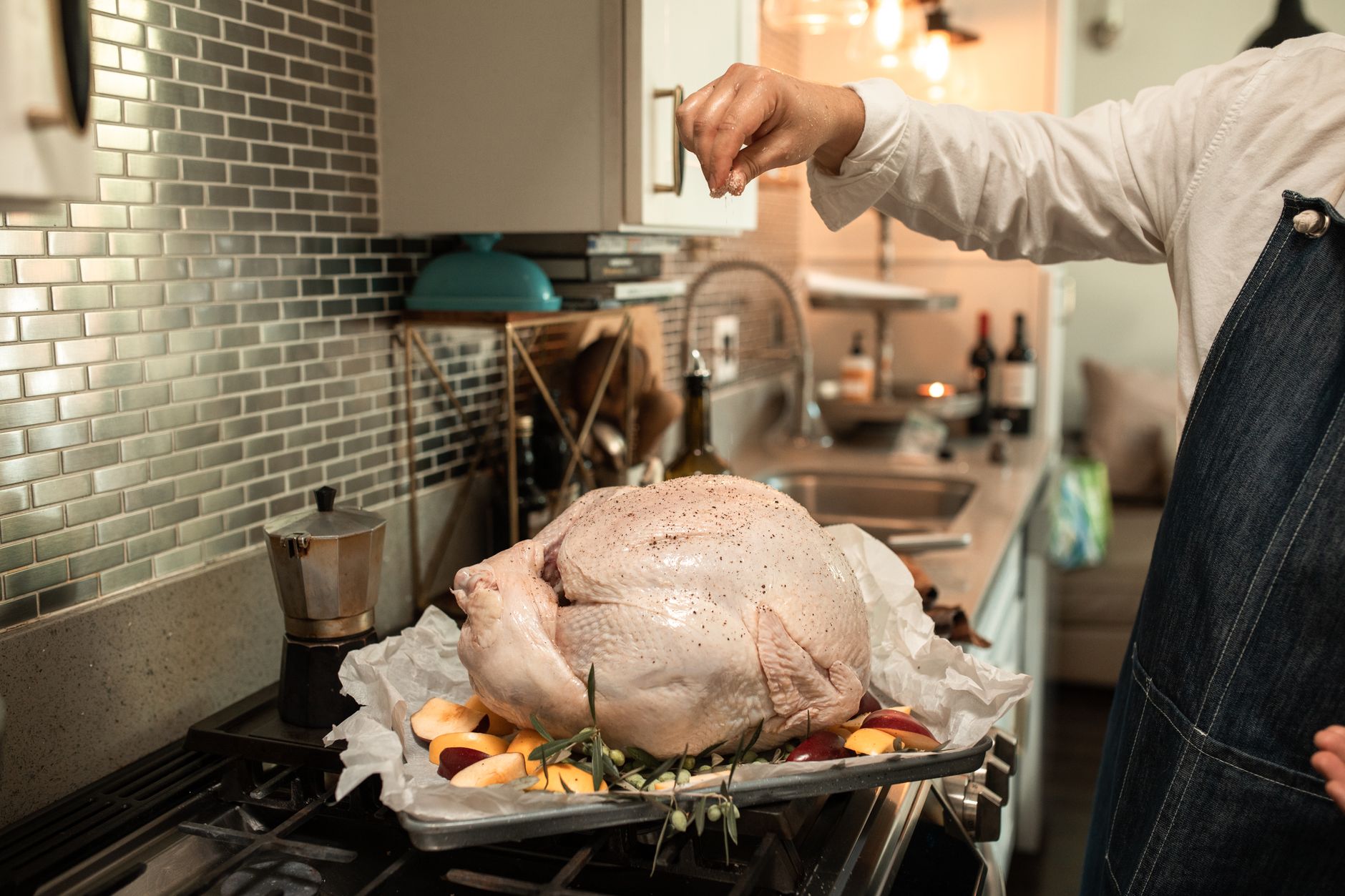
A tablespoon of Morton kosher salt weighs 15 grams. A tablespoon of Diamond Crystal weighs 9. That six-gram gap is the whole reason some people swear dry brining gave them the best turkey of their lives while others served a bird that tasted like the Dead Sea. If you want to know how to dry brine a turkey this year, the hours in the fridge are the easy part. The salt box on your counter is the variable most recipes forget to mention.
Thanksgiving is next Thursday, which means the salting window opens Monday night. So before you buy anything, go look at which red box you own.
“Kosher salt” isn’t a unit of measurement, and most dry brine recipes treat it like one
Milk Street weighed the common salts back in 2021 and published the numbers: Diamond Crystal comes in at 3 grams per teaspoon, Morton Coarse Kosher at 5. The crystals are made differently, and Diamond’s light, flaky ones leave a lot more air in the spoon than Morton’s denser flakes do. Same name, same aisle, and one weighs two-thirds more per spoonful.
Now look at how dry brine recipes are written. The Daily Meal’s roundup calls the “golden ratio” somewhere between half a teaspoon and a full teaspoon of kosher salt per pound of turkey. Milk Street’s own test cook recommends one teaspoon per pound. Neither number tells you whose salt. A few careful recipe writers do name a brand, which helps, until you notice their conversions disagree with each other. That’s the gap in almost every top-ranking guide: they hand you a volume for a product that comes in two very different densities.
The 16-pound turkey math: same recipe, 3.3 times the salt
Here’s what that looks like on an actual bird. The American Farm Bureau’s most recent national survey priced a 16-pound frozen turkey at $21.50, so let’s use that one.
Take the published range of half a teaspoon to a full teaspoon per pound. For 16 pounds, that’s 8 to 16 teaspoons. With Diamond Crystal at 3 grams per teaspoon, you’d use between 24 and 48 grams. With Morton at 5 grams per teaspoon, you’d use between 40 and 80 grams. The lightest version of this “rule” and the heaviest version differ by a factor of 3.3, and both cooks would say they followed the recipe.
Put it against the weight of the bird and it gets clearer. Sixteen pounds is about 7,258 grams. Twenty-four grams of salt is 0.33 percent of the turkey’s weight, which is gentle. Eighty grams is 1.1 percent, more than three times as much, and that’s the version people describe as “ham-like.”
The sodium math is just as lopsided. The FDA says one teaspoon of table salt carries about 2,300 milligrams of sodium, and table salt weighs roughly 6 grams per teaspoon, so each gram of salt brings close to 383 milligrams of sodium. The 56-gram difference between the two ends of that range works out to roughly 21,000 extra milligrams spread across the bird. That’s about nine days of the FDA’s recommended 2,300-milligram daily limit, divided among everyone at your table. Not all of it ends up in the slices you eat, since some stays on the skin and some ends up in the drippings, but you’ll taste it either way. And most of us are already over before the turkey shows up: the FDA puts the average American at about 3,400 milligrams a day, with more than 70 percent of it coming from packaged and prepared foods. Thanksgiving’s gravy, stuffing mix, and canned broth are all in that category.
Even recipes that name the brand don’t agree on the swap
You’d think naming the salt would fix things. Look closer.
Once Upon a Chef’s popular dry-brined turkey, written for a 12- to 14-pound bird, calls for 3 tablespoons of Morton or a quarter cup of Diamond Crystal. By Milk Street’s weights, that’s 45 grams of Morton versus 36 grams of Diamond, so the Diamond cook ends up with about 20 percent less salt. The Daily Meal says 2 teaspoons of Diamond equal about 1½ teaspoons of Morton, which works out to 6 grams versus 7.5. Milk Street’s chart says 1 teaspoon of Morton equals about 2 teaspoons of Diamond, so 5 grams versus 6. Three reputable sources, three different exchange rates.
None of them is wrong in a way that will ruin dinner. It just shows that volume conversions are rough guesses, and the guess gets bigger every time you multiply it by the weight of a holiday bird. Once you’re salting 16 pounds of turkey, a small rounding error in the ratio turns into a tablespoon of difference.
A kitchen scale and one rule beat every conversion chart
The simplest fix I’ve found: use the full teaspoon count if your box says Diamond Crystal, and use half the teaspoons if it says Morton. For our 16-pound bird, that’s 16 teaspoons of Diamond (48 grams) or 8 teaspoons of Morton (40 grams). Both land between about 0.55 and 0.66 percent of the turkey’s weight, comfortably in the middle of the published range. Neither is a salt bomb.
If you own a kitchen scale, skip the spoons entirely. Weigh 40 to 48 grams for a 16-pounder, or scale it to your bird at roughly 2.5 to 3 grams per pound, and the brand stops mattering. For a first attempt, The Daily Meal’s advice to start toward the low end is sensible: you can always salt the carved meat at the table, but you can’t take it back out.
Two exceptions before you start. If your turkey is labeled kosher, it was already salted during processing. If the label says it contains a percentage of “solution,” it was injected with a salt brine at the plant. Our breakdown of fresh vs. frozen turkey labels covers how to spot that line. Either way, skip the dry brine or use a fraction of it.
The calendar is forgiving, as long as the bird stays cold
Once the amount is right, timing is the relaxed part. Once Upon a Chef has you refrigerate the salted turkey uncovered for at least 24 hours and up to 48. Yankee Magazine’s version plans for about three days. For a Thursday dinner, that means salting sometime between Monday night and Tuesday evening. If your bird is still thawing, Once Upon a Chef notes you can start the dry brine during the final 48 hours of thawing, so a frozen turkey doesn’t automatically knock you out of the game.
Rub the salt everywhere, including under the breast skin and inside the cavity, then set the bird on a rack over a sheet pan on the bottom shelf, where any drips can’t land on the salad greens. Leaving it uncovered dries the skin, which is why dry-brined turkeys crisp up so well. University of Wisconsin Extension’s brining guidance is the one rule not to bend: keep the turkey at 40°F or below the whole time. Don’t rinse it before roasting. Rinsing won’t remove much salt, and it splashes raw poultry juice around your sink.
Then there’s the part nobody mentions until Friday. Salt keeps working in the leftovers, and turkey sandwiches stack more sodium on top. If you’re planning a full weekend of them, our guide to how long Thanksgiving leftovers are good covers the fridge clock. I still think dry brining is worth the fridge space, and I’d rather wrestle a salted turkey onto the bottom shelf on Tuesday than haul a five-gallon bucket of wet brine around. It just works far better once “a tablespoon of kosher salt” means a number of grams you chose on purpose. So before you start: check the box, use half the teaspoons if it’s Morton, and get the bird in the fridge by Tuesday.