

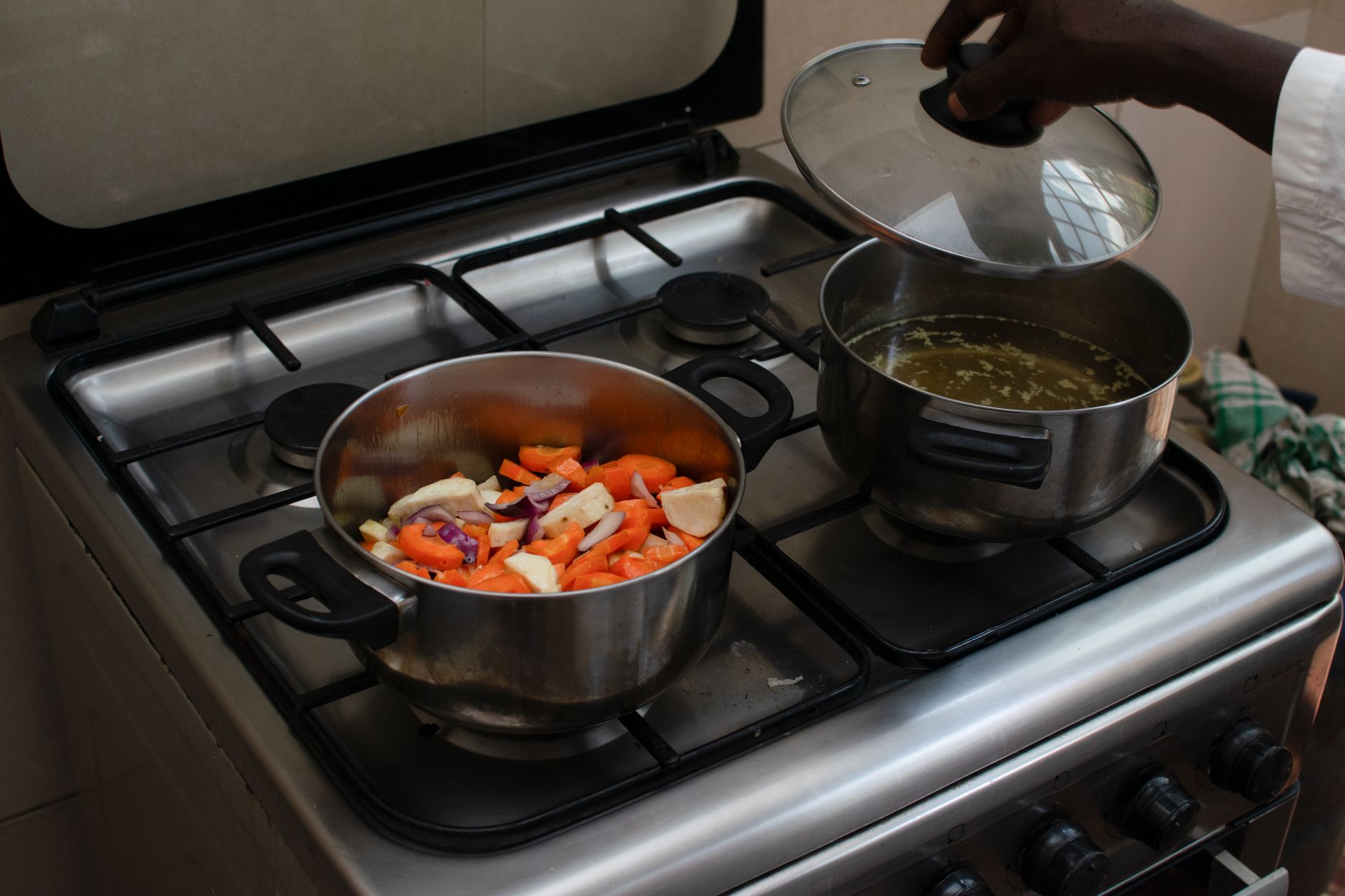
The takeout habit survives on a story you tell yourself on cold weeknights: that ordering in is the fast, easy option and cooking is the slog. On an October Tuesday, when it’s dark at six and you’re tired, that story wins almost every time. But it’s mostly false, and one-pot fall dinners are the proof. The soups, chilis, and braises that define fall cooking beat takeout on cost by a wide margin and, once you count the real minutes honestly, on time too, all while dirtying a single pot. The season practically designed the format. You just have to stop believing the tired-night story.
Start with the cost, because the gap is bigger than most people guess. Data on home cooking versus eating out puts the average home-cooked serving at around $4.31, against roughly $20.37 to eat out, which makes cooking at home somewhere between two and five times cheaper depending on the meal. And the gap is widening: the National Restaurant Association’s figures show restaurant prices rising about 3.6 percent in a recent year while grocery prices climbed only 1.6 percent. Every month you lean on delivery, the math tilts further against you. The tired-night convenience isn’t just a little pricier; it’s a standing multiplier on your food budget.
The worked math on a single pot of soup
Let me run an actual pot, because this is where it gets concrete. A big pot of hearty lentil-and-sausage soup or a pot of chili costs maybe $14 to $16 in groceries, a bag of lentils or a couple cans of beans, an onion, garlic, canned tomatoes, some sausage or ground turkey, a box of broth, spices you already own. That single pot yields roughly six generous servings, which pencils out to about $2.50 a serving. Order the equivalent comfort-food dinner for one on a delivery app and you’re looking at $20 or more before you add the delivery fee, service charge, and tip that quietly push a $15 meal past $25.
Now stack them. Six servings from your pot cost about $15 total. Six comparable takeout dinners, at a conservative $22 each once fees are in, run around $132. That’s a $117 difference from one evening of cooking, and the soup arguably tastes better on day two. Do this once a week through the fall and winter and you’ve kept over a thousand dollars that would otherwise have dissolved into delivery fees, for food you’d have been happy to eat anyway.
The time argument nobody actually checks
The stronger objection is time, so let’s be honest about the real clock instead of the imagined one. People compare “cooking” against “ordering” as if ordering takes zero minutes, when in reality a delivery order means scrolling the app deciding what you want, placing the order, and then waiting 30 to 50 minutes for it to arrive, during which you’re hungry and hovering. Call it 40 minutes from decision to first bite, most of it spent waiting.
A one-pot soup or chili flips that ratio in your favor. You spend maybe 15 minutes actively chopping and browning, then you walk away while it simmers, free to do laundry, help with homework, or sit down, exactly the way you’d be waiting on delivery except your house smells incredible and dinner is multiplying on the stove. Your hands-on time is often less than the time you’d spend managing a takeout order, and the simmering happens whether you’re watching it or not. The one-pot format wins the time argument specifically because most of its cooking is hands-off, which is the part the tired-night story conveniently forgets.
Why fall is the format’s home season
One-pot cooking isn’t a year-round gimmick; it’s genuinely at its best right now, which is part of why fall is the easiest time to break the takeout habit. The dishes that reward a single pot and a long, forgiving simmer, soups, stews, chilis, braised beans, brothy pastas, are exactly the ones you crave when it turns cold. They’re built on cheap, sturdy ingredients that are in season and on sale, dried beans and lentils, root vegetables, tougher cuts of meat that turn tender with time, and they improve as leftovers rather than degrading, so a Sunday pot genuinely feeds you into midweek. The season and the technique are made for each other.
There’s a low-effort structure worth internalizing that makes almost any one-pot dinner work without a recipe: build a base of aromatics like onion and garlic, add a protein or a legume, pour in a flavorful liquid such as broth or tomatoes, and let it simmer until everything’s tender, then finish with something bright like a squeeze of lemon, a handful of herbs, or a dollop of yogurt. Learn that rhythm and you can improvise dinner from whatever’s in the pantry, no delivery app required. It also makes the batch approach to weeknight eating effortless, since one pot is a component and leftovers all at once.
A few pots worth putting in rotation
If a blank stove is the thing that sends you back to the app, a short mental shortlist helps. A pot of white beans simmered with garlic, greens, and a parmesan rind is nearly free and tastes like far more than the sum of its parts. A weeknight chili of ground turkey, beans, tomatoes, and spice comes together in under an hour and gets better every day it sits. A coconut-lentil curry needs nothing but pantry staples, a can of coconut milk, and a bag of red lentils that cook down in twenty minutes. A brothy chicken-and-rice pot, essentially a stripped-down soup, uses cheap thighs and stretches one small package of meat across a whole pot. None of these require a recipe you follow to the letter; they’re templates you can bend around whatever’s in the fridge.
The freezer extends the whole strategy even further. Most of these dishes freeze beautifully in single portions, which means one Sunday pot can seed several future weeknights when you’re too tired to cook at all, giving you a homemade answer to the exact moment you’d normally reach for delivery. A freezer with three kinds of soup in it is a standing defense against the takeout reflex.
The habit that quietly pays you back
None of this is an argument that takeout is a moral failure or that you should never order in; some nights you genuinely need someone else to cook, and that’s fine. It’s an argument against the reflex, the automatic assumption that on a cold, tired weeknight ordering is faster and easier when it’s usually neither. One-pot fall dinners cost a fraction of delivery, take less hands-on time than you think, and leave you with one pot to wash and days of leftovers to show for it. Break the reflex even one or two nights a week this season and the savings compound into real money, while your weeknights get warmer, cheaper, and genuinely easier. The tired-night story was never true. The soup is.
Sources: Wealthvieu and Savinly (2025 home-cooking vs. eating-out per-serving cost data); National Restaurant Association (restaurant vs. grocery price inflation)