

If your turkey came out of the oven Thursday, the carcass sitting in your fridge has a deadline, and it’s closer than it looks. Penn State Extension’s holiday leftovers guidance gives cooked turkey 3 to 4 days in the refrigerator, which puts the last good day for turkey stock from carcass somewhere between Sunday and Monday. After that, the bones belong in the trash, not the pot.
Most people who make stock this weekend will get the simmering part right, because it’s almost impossible to get wrong. Bones, water, low heat, a couple of hours. The part that actually decides whether your stock is a freezer asset or a stomach ache is the part every recipe rushes through in one sentence: cooling it down. And the most common instruction for that step, let it cool on the counter before you refrigerate, quietly eats most of your safety margin.
The simmer is the easy part of homemade turkey stock
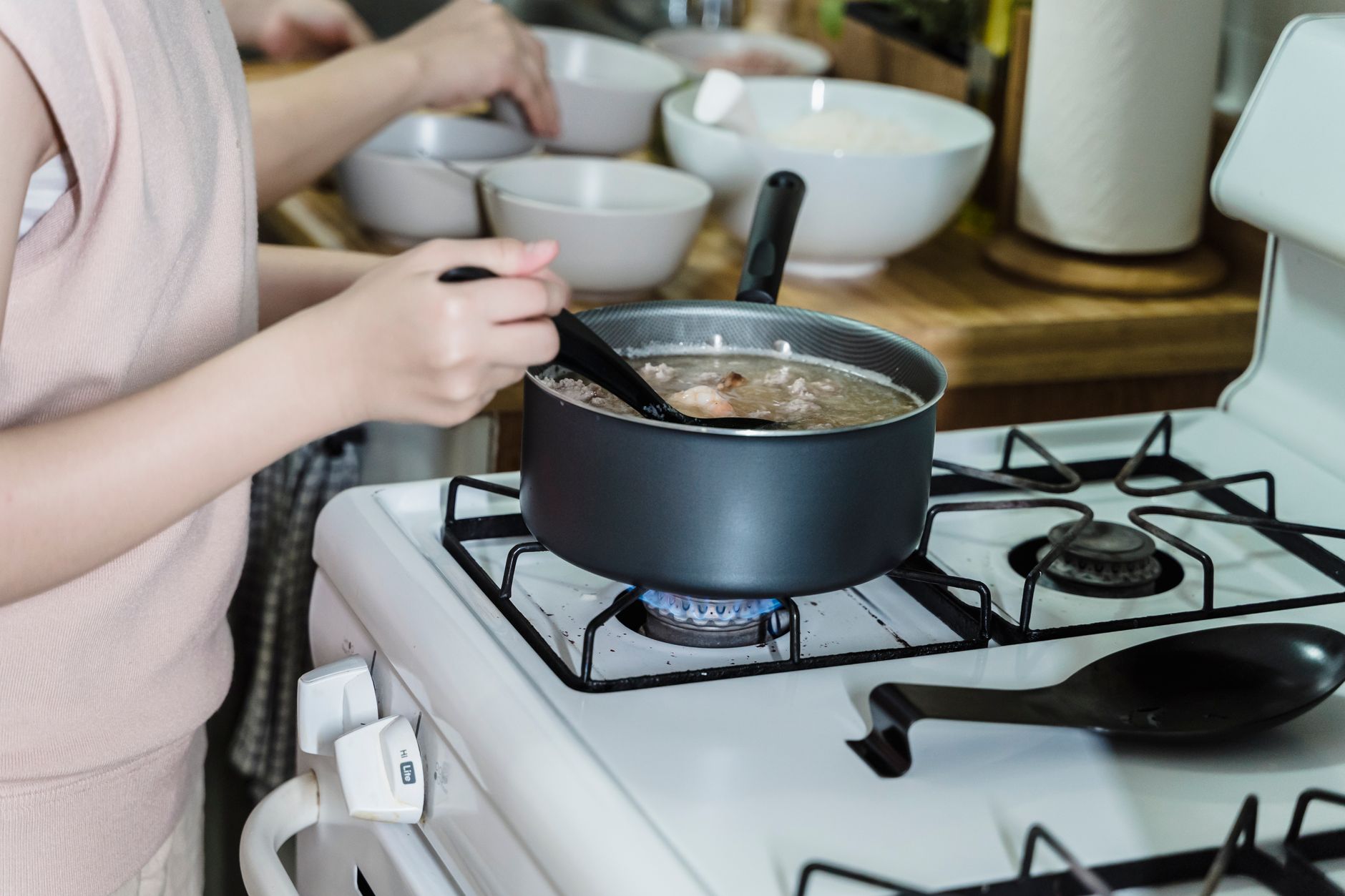
America’s Test Kitchen’s simple turkey stock is about as stripped down as it gets. You take the carcass from a 12 to 14 pound bird, break it into roughly 4 pounds of bones, cover it with 10 cups of water, and simmer it covered for 2 hours. No roasted vegetables, no bouquet garni. That yields about 8 cups of stock with real body, because two hours is enough time to pull gelatin out of the joints and skin.
I like this version because it removes the excuses. You don’t need to peel a carrot. If you want onion and celery in there, add them, but a pot of plain turkey stock is more useful in December than a heavily seasoned one, since you’ll be turning it into gravy, risotto, soup, and whatever you braise in January.
The recipe takes care of the simmer. What it doesn’t do is get two quarts of nearly boiling liquid cold before the bacteria get a head start, and that’s where the weekend goes wrong.
A pot of hot stock is the exact food that causes holiday outbreaks
The CDC estimates that Clostridium perfringens causes nearly 1 million foodborne illnesses in the United States every year. It’s a boring, common bacterium, and its spores survive cooking, and when cooked food sits between 40°F and 140°F, they wake up and multiply. The CDC’s own description of the typical culprit reads like a stockpot: foods cooked in large batches and held at unsafe temperatures, with poultry and gravy at the top of the list. The agency also notes that most outbreaks happen in November and December.
A full pot of liquid is a heat battery. Ten cups of water simmering at around 200°F hold an enormous amount of heat, and a deep pot gives that heat almost no surface to escape through. That’s why NC State Extension says flatly that you should never use the refrigerator or freezer to cool large quantities of hot food. A hot pot in the fridge cools slowly in the middle, and it warms everything around it, including your leftover turkey.
The turkey stock cooling clock runs out faster than the recipe suggests
Restaurants work from the FDA Food Code’s two-stage rule, summarized in the Texas Department of State Health Services cooling fact sheet: food has to drop from 135°F to 70°F within 2 hours, then from 70°F to 41°F within another 4 hours, for a total of no more than 6. Your kitchen isn’t inspected, but the bacteria don’t know that.
Now read the cooling step in the Test Kitchen recipe again. Strain, let it cool about 20 minutes, skim the fat, then let it cool another 1 1/2 hours before refrigerating. That’s close to two hours of a deep container on the counter, which is most of the first-stage window spent on passive cooling that isn’t fast. It isn’t reckless advice for a home cook. It just leaves you no slack if you get distracted, and on a holiday weekend everyone gets distracted.
Ice and a metal bowl cut the dangerous stretch to about 11 minutes
Cook’s Illustrated tested the fix. They cooled 2 1/2 quart batches of hot soup in bowls set over ice, stirring constantly, and timed the drop from 174°F to 80°F. In stainless steel it took 11.5 minutes. In glass, 26 minutes. In heatproof plastic, 36 minutes. Same ice, same liquid, and the bowl alone tripled the time.
That’s the rule I follow now. Strain the stock into the biggest stainless mixing bowl you own, set it in a sink or a larger bowl packed with ice and a little cold water, and stir for ten or fifteen minutes. Eight cups is about 2 quarts, so it fits the test almost exactly. Once it’s below 80°F, portion it into containers no deeper than 3 inches (NC State’s limit for thin liquids like soup and broth) and get it into the fridge or freezer uncovered until it’s cold.
No big stainless bowl? Use your second-largest metal pot. The thing to avoid is the tall plastic deli tub, which looks tidy on the shelf and, per that same test, cools about three times slower than steel.
The math: about $4.54 of broth, or $7.72 if you compare it fairly
Whether it’s worth a Sunday afternoon comes down to arithmetic. Those 8 cups equal 64 ounces, which is two 32 ounce cartons. Swanson Chicken Broth lists at $2.27 a carton at Walmart (it was on sale for $1.50 when I checked), so plain carton broth would cost you $4.54 at full price, or $3.00 on sale.
That comparison flatters the carton, though. Regular broth is thin. What a slow-simmered carcass gives you is closer to bone broth, which gels when it’s cold. Swanson Chicken Bone Broth runs $3.86 for 32 ounces at Walmart, so two cartons cost $7.72. Your ingredients cost was a carcass you already paid for and about ten cups of tap water.
Saving seven or eight dollars won’t change your December budget. But the real value is that you’ve got 2 quarts of good stock ready for the gravy you’ll make again at Christmas, and it keeps. The Test Kitchen gives finished stock up to 2 days in the fridge and up to 4 months in the freezer. Penn State’s guidance lets turkey covered in broth or gravy go up to 6 months frozen.
If Monday comes first, freeze the carcass and walk away
If you can’t stand at the stove this weekend and give the stock its fifteen minutes of ice and stirring, don’t make it in a hurry and shove the pot in the fridge. Break the carcass into pieces, bag it, and freeze it today. Frozen bones make the same stock in January, and you skip the countdown entirely.
If you already know the leftover rules, this is the one exception they don’t cover well. Our guide to how long Thanksgiving leftovers are good handles the turkey meat and the sides. The stock is a second batch of cooked food with its own clock. And if you dry brined your turkey this year, taste before you salt the stock, because the bones carry some of that seasoning with them.
Turkey stock from carcass is one of the best free things in your kitchen this week. Make it by Monday, chill it fast in metal over ice, and give yourself a freezer full of gravy insurance.