

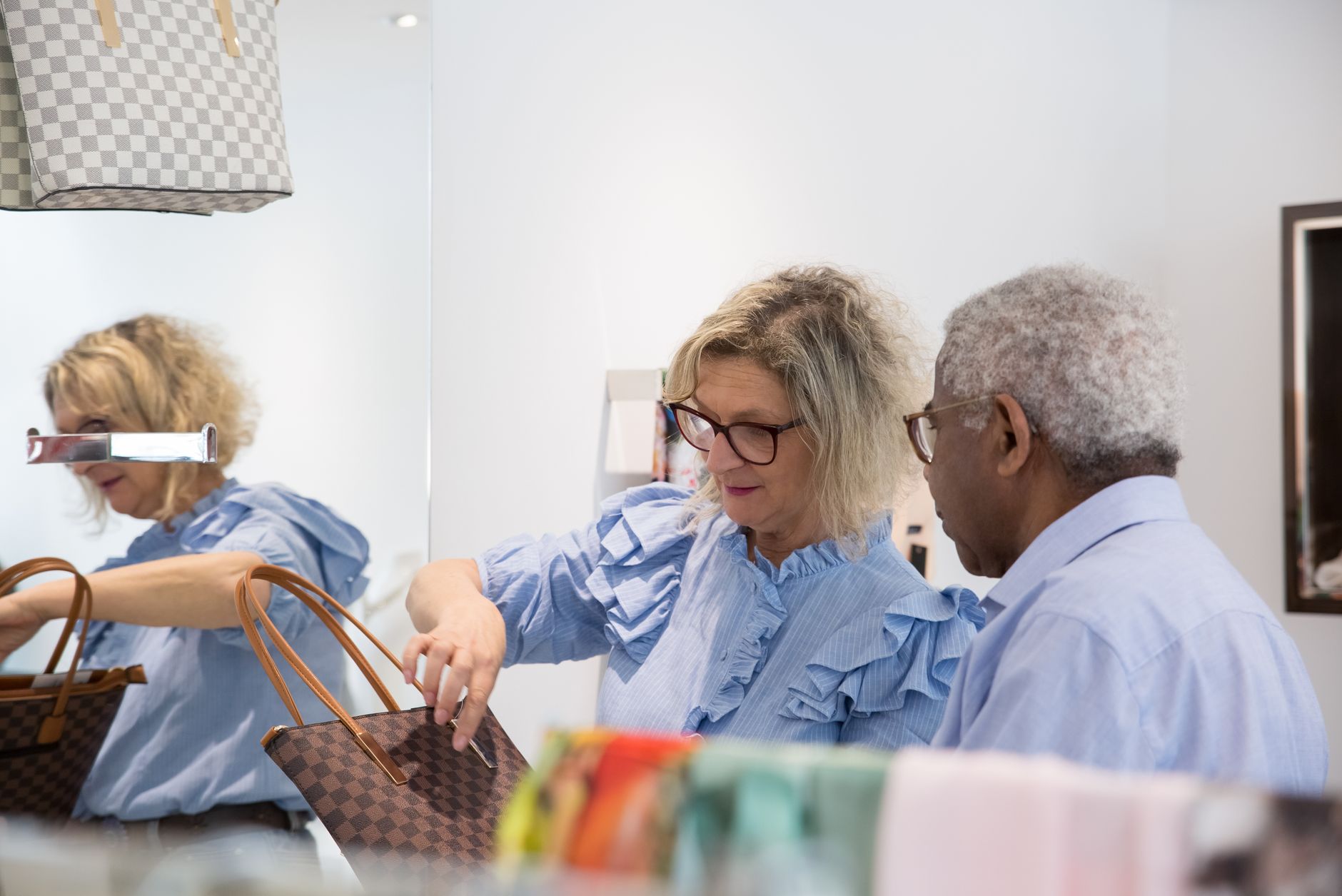
Secondhand luxury is one of the few corners of shopping where buying used can actually be the savvier financial move, not the compromise. Iconic bags from houses like Hermès and Chanel have a documented habit of holding or even gaining value over time, which is why the resale market is booming. But that same boom has flooded the space with convincing fakes, and the real skill of secondhand luxury authentication isn’t sniffing out a great deal. It’s making sure the great deal is real, because the counterfeits have gotten good enough that the price tag alone will fool you.
The scale of the opportunity, and the risk, is worth seeing in numbers. The luxury resale market was valued at roughly $41.6 billion in 2026 and is projected to reach about $60 billion by 2030, growing nearly 10 percent a year, with handbags making up more than 40 percent of it. That’s a legitimate, thriving marketplace. Sitting inside it, though, is a serious counterfeit problem: when the authentication company Entrupy scanned handbags and sneakers worth about $1.9 billion in resale value in 2024, it flagged 8.4 percent of them as fake, and for one major house, roughly a third of the scanned bags came back unverifiable. Nearly one in twelve items in a professionally scanned pool was counterfeit. The fakes are not rare, and they are not obvious.
The price is the first tell, and the loudest
Before you examine a single stitch, look at the number. The most reliable red flag in the entire category is a price that’s too good to be true, one that significantly undercuts what that model reliably sells for elsewhere. Counterfeiters know that a bargain shuts off the rational part of your brain, the same dopamine rush that drives any impulse buy, so they price to trigger the “I can’t pass this up” reflex. A genuine Chanel flap or Hermès Kelly does not sell for a quarter of its market rate from a stranger online, no matter how good the sob story about a quick sale is. When the price feels like winning the lottery, treat it as the single strongest piece of evidence you’re looking at a fake, and let that suspicion drive everything you check next.
Legitimate resale, by contrast, prices realistically because the sellers know the market. More than 70 percent of resale now happens online, and over half of reputable offerings are labeled certified pre-owned specifically to reassure buyers, which tells you that the honest part of the market competes on trust, not on impossible discounts.
What to actually inspect
Once the price passes the smell test, the bag itself tells you the rest, and luxury houses make authentication possible precisely because their quality is hard to fake cheaply. Start with the materials and construction, because this is where counterfeiters cut corners to protect their margins. Real luxury bags use premium leather, coated canvas, or supple nappa with substantial, well-finished hardware; fakes tend toward synthetic materials, flimsy linings, and metal that feels light and chips or tarnishes. Run your eyes along the stitching, which on a genuine bag is straight, even, often double-stitched, and neatly finished. Loose threads, crooked seams, or uneven spacing are among the most dependable giveaways, because precise stitching is slow and expensive and the counterfeit economics don’t allow for it.
Then check the logo and hardware detail. Authentic logos are crisp, correctly proportioned, and consistently placed, and engravings on zippers and clasps are sharp and precise. Counterfeits betray themselves with slightly off spacing, fuzzy engraving, lightweight hardware, and, occasionally, an actual misspelling. Finally, hunt for the brand’s specific authentication markers: Louis Vuitton has historically stamped date codes inside, Michael Kors places serial numbers inside the bag, and most houses have a documented system of codes, stamps, or, increasingly, embedded chips. Learn the system for the specific brand you’re buying before you shop, because knowing exactly where a given house hides its mark, and what it should look like, turns a guessing game into a checklist.
The worked math on paying for certainty
Here’s where a little spending saves a lot, and the arithmetic is lopsided. Say you’ve found a Chanel bag listed at $3,000 from an individual seller, a plausible price for a used classic. You have two ways to protect that $3,000. The first is to buy only from platforms that authenticate in-house, like The RealReal, which runs every item through a verification process and rejects counterfeits, so the vetting is baked into a price that may run a bit higher. The second, if you’re buying from a less-vetted source, is to pay for a professional authentication service, which typically costs somewhere in the range of $20 to $40 for an expert opinion or a machine scan. Weigh that against the downside: without it, you’re risking the entire $3,000 on a bag that an 8.4 percent counterfeit rate says has real odds of being fake. Spending $30 to insure a $3,000 purchase is one of the clearest good deals in shopping, and skipping it to save the $30 is how people end up owning a very expensive fake.
That reframes the whole transaction. The authentication fee isn’t an annoying add-on; it’s cheap insurance on an expensive bet, and treating it as optional is exactly the mistake counterfeiters are counting on.
Buy the real thing, or buy nothing
Secondhand luxury can be genuinely smart, letting you own a lasting, sometimes appreciating piece for less than retail, but only if the piece is authentic, and the thriving fake market means you can no longer assume it is. Real secondhand luxury authentication comes down to a sequence: distrust a too-good price first, inspect the materials, stitching, hardware, and brand markers second, and lean on in-house or professional authentication whenever the stakes are high. Buy from sellers who authenticate, learn the tells for your specific brand, and never let a thrilling discount rush you past the checks. The goal isn’t to be paranoid. It’s to make sure that when you finally carry that bag, the only thing about it that’s a steal is the price.
Sources: Research and Markets / industry data on the luxury resale market (2026); Forbes and Entrupy (counterfeit scan rates, 2024–2025); The RealReal (authentication process)